O post 🏛️ Malta History: Knights, Temples & More apareceu primeiro em Viajante Digital.
]]> Malta may be just a small island, but its history is truly monumental and captivating . With over 7,000 years of human presence and three UNESCO World Heritage Sites — The majestic capital Valletta, the mysterious underground Ħal Saflieni Hypogeum, and the awe-inspiring Megalithic Temples make Malta more than just a living museum — it’s an open book where you can immerse yourself in history and watch the past come alive.
Over the centuries, the archipelago has been influenced by a mosaic of civilizations, including the Phoenicians, Romans, Arabs, the Knights of St. John, the French, and the British. As a result these layers of history have shaped not only Malta’s architecture and traditions, but also its unique charm.
If you’re passionate about culture and history, Malta is an open-air history book — and every corner you explore reveals a new chapter.
 In this post, you’ll journey through Malta’s rich past and uncover the must-visit historical sites that make this Mediterranean island an unforgettable destination for cultural travelers.
 Mdina – The Silent City Frozen in Time

Perched on a hilltop in central Malta, Mdina — often called The Silent City — is a beautifully preserved medieval town that once served as the island’s capital. Its roots date back over 4,000 years, making it one of the oldest continuously inhabited places on the island.
Originally founded by the Phoenicians around the 8th century BC and later expanded by the Romans, Mdina then became a strategic and administrative center. When the Normans arrived in the 11th century, they fortified the city with the high walls that still surround it today. Mdina’s significance as a capital and administrative center declined following the arrival of the Knights of St. John in the 16th century, — However, even today, its noble palaces, churches, and narrow alleys remain untouched by modern development.
Malta History: Mdina Dungeons Museum
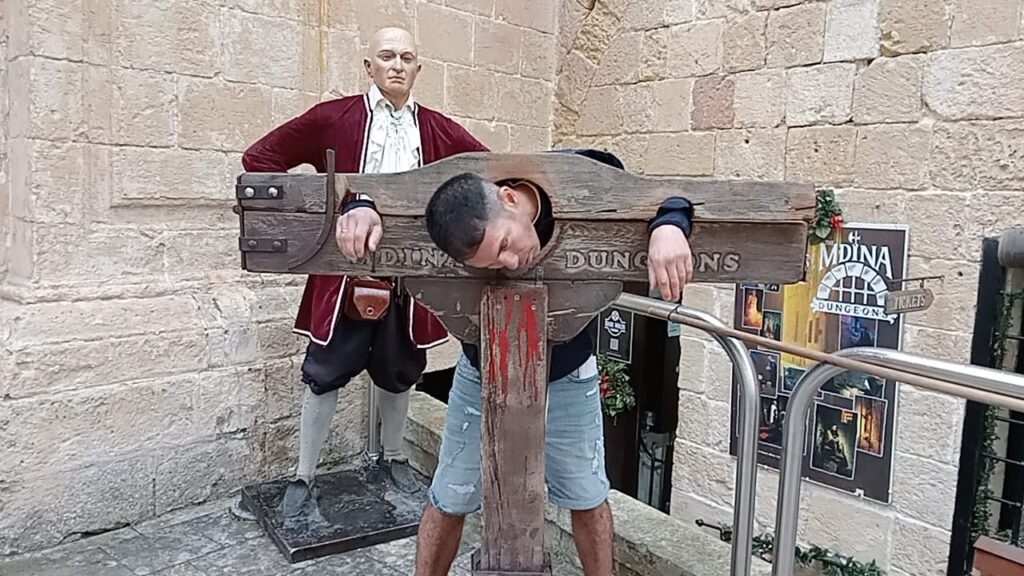
One of the town’s most fascinating attractions is the Mdina Dungeons Museum, located beneath the historic Vilhena Palace near the city gate. This museum offers a gripping look into Malta’s darker past through wax figures and atmospheric chambers that recreate scenes of torture, imprisonment, and punishment from different historical periods — including the Roman era, the Inquisition, and the rule of the Knights.
Don’t miss:
- The Baroque-style St. Paul’s Cathedral, built on the site where the Apostle Paul is said to have met the Roman governor.
- The sweeping views from the bastion walls, offering panoramas of much of the island.
- Quiet, lantern-lit streets that make Mdina especially magical in the evening.
- Highlights:
- Mdina Gate (featured in Game of Thrones)
- St. Paul’s Cathedral
- Palazzo Falson Historic House Museum
- Tip: Visit in the early morning or evening for fewer crowds and magical golden light.
Whether you’re a history lover, photographer, or simply a curious traveler, Mdina is a must-visit — a city that feels like stepping straight into the past.
 Plan Your Visit to Mdina – Top Tips
- Book a guided walking tour of Mdina, Malta’s Silent City: Learn about Mdina’s medieval history, noble families, and hidden gems with a certified local guide. Book your Mdina historical tour now.
 Looking for where to stay in Mdina or Rabat? Discover the best hotels and guesthouses in and around Mdina, perfect for travelers seeking charm and quiet. See top-rated Mdina accommodations here.
 Why visit Mdina at night? Explore the peaceful, candle-lit streets after sunset when the day-trippers are gone. Find the best evening experiences in Mdina. See also: The Knights of Malta Museum Entry Ticket.
 The Three Cities – Birgu, Senglea, and Cospicua

Long before Valletta rose as Malta’s capital, the area known today as The Three Cities — Vittoriosa (Birgu), Senglea (L-Isla), and Cospicua (Bormla) — served as the original stronghold of the Knights of St. John upon their arrival in 1530. These fortified cities, nestled around the Grand Harbour, are among the most historically significant places in Malta and offer an authentic and breathtakeing glimpse into the island’s rich military and maritime heritage.
Birgu (Vittoriosa) is the oldest and most historically rich of the three. It became the headquarters of the Knights and home to the Auberge de Castille, the Inquisitor’s Palace, and the Fort St. Angelo, a key bastion in defending Malta during the Great Siege of 1565 against the Ottoman Empire. Walking its quiet alleys feels like stepping into a living museum.
Senglea and Cospicua, both heavily fortified during the time of the Knights, were later rebuilt after extensive damage in World War II. Today, they retain their local charm, with narrow lanes, traditional Maltese balconies, and spectacular views over the harbour and Valletta.
Unlike more tourist-heavy spots, The Three Cities offer a charming view and a peaceful immersive atmosphere. Here, you can enjoy an espresso in a quiet piazza, explore centuries-old churches and bastions, or stroll along the marina filled with historic boats and luxury yachts.
Malta History – Must-see highlights:
- Fort St. Angelo in Birgu
- The Maritime Museum
- The Inquisitor’s Palace
- Senglea’s Gardjola Gardens, with stunning views of the Grand Harbour
- Narrow alleyways with colorful doors and traditional Maltese balconies
- Tip: Take a traditional dgħajsa boat across the Grand Harbour for a scenic arrival.
For travelers seeking a deeper, less commercialized connection to Malta’s past, The Three Cities are a hidden gem not to be missed.
Extra Tips for Your Visit to The Three Cities
 Book your historical tour of The Three Cities: Discover fortresses, hidden stories, and rich heritage with a local guide. Click here to explore tour options.
- Thinking of staying in The Three Cities? Experience authentic Malta away from the crowds. Check the best hotel options here.
 Prefer to explore on your own? Use our interactive map to find the top historical spots across the area. Access the map here.
 Ħal Saflieni Hypogeum – A Prehistoric Wonder
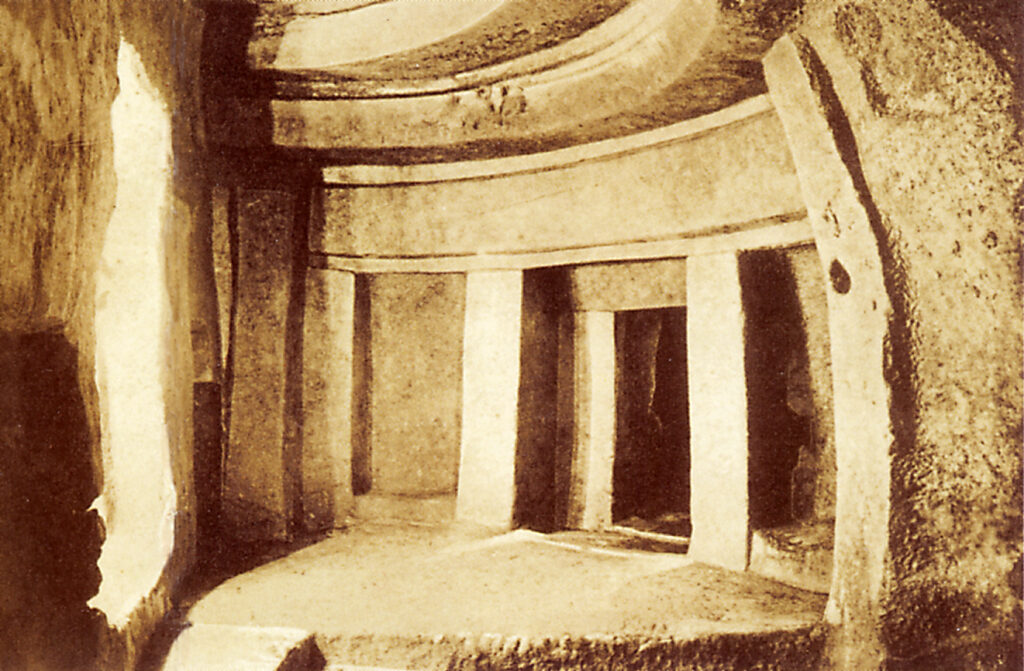
Hidden beneath the streets of Paola lies one of the world’s most extraordinary and mysterious archaeological sites — the Ħal Saflieni Hypogeum, a UNESCO World Heritage Site dating back to around 4000 BCE. This subterranean necropolis, carved entirely out of limestone, served as both a temple and a burial chamber, it’s believed to have housed the remains of over 7,000 individuals.
What makes the Hypogeum truly unique is its advanced engineering and spiritual significance. The chambers are arranged on three levels, with precise acoustics and intricate carvings that show a deep understanding of architecture and ritual. One of its most mysterious features is the “Oracle Room,” where a deep voice echoes with a powerful resonance due it’s exceptional acoustics— a phenomenon believed to have been used during ancient ceremonies.
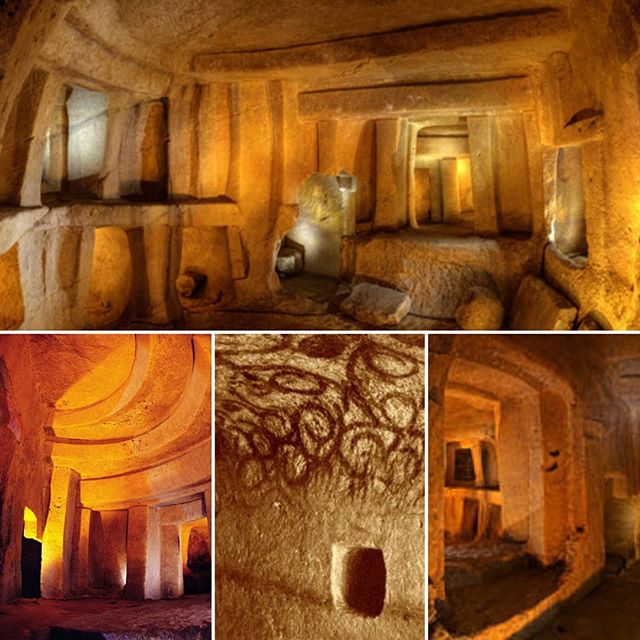
Visits are strictly limited to preserve this fragile site, making it a rare and unforgettable experience for anyone interested in prehistory, archaeology, and ancient cultures.
Pro tip: Book tickets in advance — access is restricted to only a few visitors per day. See website.
- Why visit: This underground burial site dates back to 4000 BCE and is one of the most important prehistoric monuments in the world.
- Important: Entry is limited to a small number of visitors per day. Book tickets weeks (or months) in advance.
- UNESCO Status: World Heritage Site
 Fortifications of Valletta
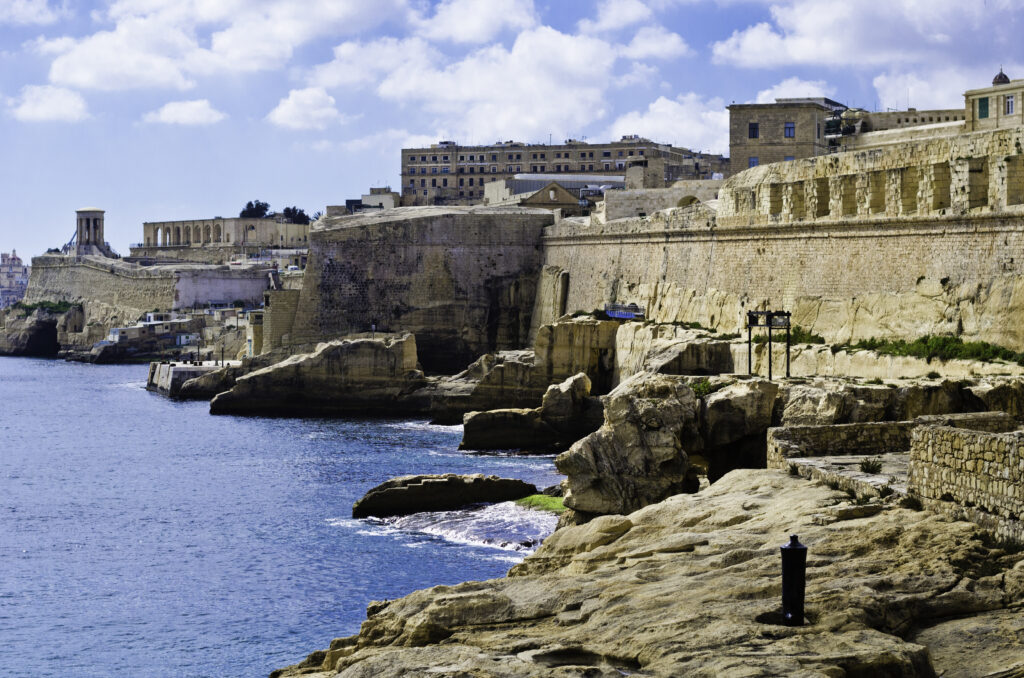
After the Great Siege of 1565, the Knights of St. John transformed the rocky peninsula of Valletta into one of the most fortified cities in the world. Designed by military engineers of the time, including Francesco Laparelli, these massive bastions, ramparts, forts, and curtain walls were built not only for defense but also as a bold statement of resilience and power.
Stretching along the Grand Harbour and Marsamxett Harbour, Valletta’s fortifications include impressive structures like Fort St. Elmo, St. John’s Bastion, and the Saluting Battery, which still fires daily as a tribute to Malta’s martial past. These walls have withstood centuries of conflict, from Ottoman sieges to WWII bombings, and remain among the best-preserved examples of early modern military architecture in Europe.
Walking along these walls offers panoramic views of the Mediterranean and a tangible sense of the city’s strategic importance through the ages. For history lovers, it’s a step back in time through the very stones that once defended an island at the crossroads of civilizations.
- Highlights:
- Upper Barrakka Gardens
- Lascaris War Rooms
- Fort St. Elmo and the National War Museum
Extra Tips for Your Visit to Valletta
- Book a walking tour of Valletta: Dive into the capital’s Baroque beauty and fascinating history with a local expert. Click here to find tours.
- Want to stay in Valletta? Enjoy the charm of Malta’s capital right outside your door. Check the best hotel options here.
- Explore at your own pace? Use our custom map to discover Valletta’s top historical landmarks. See the map here.
Malta in WWII – The Island That Refused to Surrender
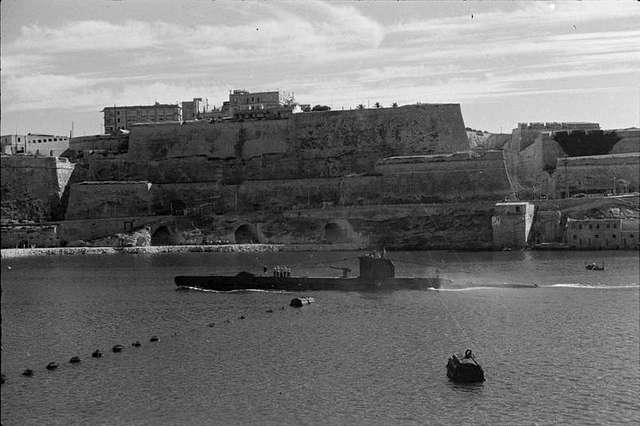
Though small in size, Malta played a colossal role in World War II, becoming one of the most heavily bombed places on Earth. Due to its strategic location between Europe and North Africa, the island served as a crucial base for the Allies to disrupt Axis supply lines across the Mediterranean.
Between 1940 and 1942, Malta endured over 3,000 air raids, particularly during the Siege of Malta, when Axis forces (Germany and Italy) tried to force the island into submission through relentless bombing and blockades. Despite extreme hardships, the resilience of the Maltese people and the bravery of Allied forces earned Malta the George Cross, awarded by King George VI in 1942, for “heroism and devotion” — a symbol now proudly displayed on the Maltese flag.
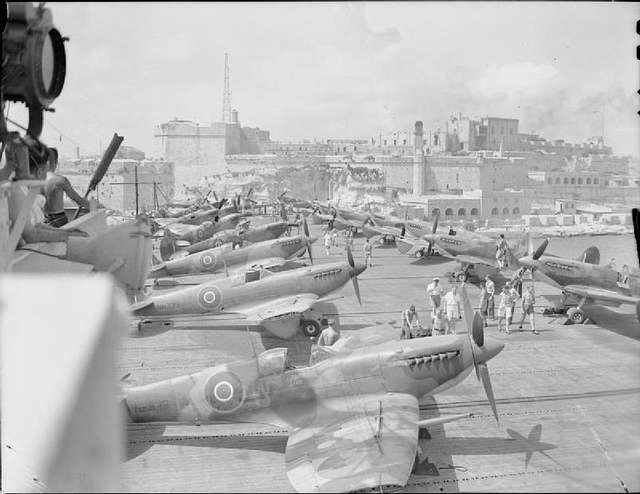
Places to visit:
- Lascaris War Rooms (Valletta): An underground command center from where the Allied invasion of Sicily was coordinated.
- Malta at War Museum (Birgu): Features authentic WWII shelters, uniforms, and personal stories of those who lived through the bombings.
 The National War Museum at Fort St. Elmo (Valletta): Home to the original George Cross and extensive WWII exhibits.
- Underground Shelters in Mosta and Rabat: Explore the civilian experience during air raids.
 The Maltese Language – A Living Legacy of Malta’s History
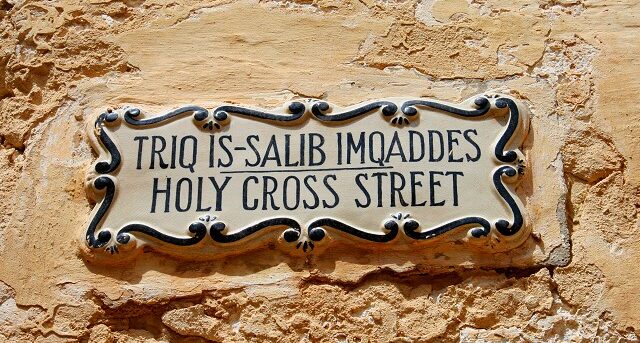
When exploring Malta history, we can’t ignore one of its most unique and enduring legacies: the Maltese language.
Maltese (Malti) is more than just a means of communication—it’s a living reflection of the island’s complex past. It’s the only Semitic language written in the Latin alphabet and the only one recognized as an official language of the European Union (See infomation here!). This linguistic blend mirrors the waves of civilizations that shaped Malta over thousands of years.
Where does it come from?
Maltese evolved from Siculo-Arabic, spoken in Sicily and Malta between the 9th and 12th centuries during Arab rule. But as new powers arrived—Normans, Italians, the Knights of St. John, the French, and the British—the language absorbed vocabulary and influences from Italian, Sicilian, French, and English. Today, you’ll hear this fascinating mix in everyday conversations on the island.
What makes it special for travelers?
Hearing locals switch between Maltese and English effortlessly is part of the cultural experience. Place names, old inscriptions, and even museum signs often include Maltese, adding another layer to your historical journey. Understanding its roots helps you appreciate Malta not just as a land of beautiful sites—but as a place where history lives in every spoken word.
 Whether you’re walking through the ancient streets of Mdina, reading plaques in Valletta, or hearing folk songs during a festa, You will realise the Maltese language connects it all.
 Final Tips for Cultural Travelers
- Buy a Heritage Malta Pass for access to multiple sites.
- Consider a guided tour for deeper context.
- Wear comfortable shoes—many historical sites include stairs or uneven paths.
Know more about Malta History
Want to explore Malta beyond the beaches? Don’t miss our full guide: How to Travel to Malta on a Budget: Essential Tips
Planning a trip to Malta but not sure where to start? Let us help with a custom itinerary! – Learn more!
 What You Need for a Smooth Trip to Malta: Essential Travel Checklist
Planning a trip to Malta? Here’s a practical checklist to ensure a stress-free experience from start to finish:
 Travel Documents
- Passport – Must be valid for at least 6 months beyond your travel dates
- Visa – Not required for stays up to 90 days for many nationalities (check your visa status here)
- Proof of return or onward travel – Might be requested upon arrival
 Travel Essentials
- Get travel insurance – Covers medical issues, delays, lost luggage & more. Don’t travel without it!
- Book flights in advance – Best prices for early planners
- Reserve your airport transfer – Stress-free ride directly to your hotel
- Hotel bookings confirmed – Have digital or printed copies ready
 Money & Payments
- Credit/Debit card – Accepted almost everywhere
- Cash in euros (€) – Useful for small purchases, markets, buses
- Optional: Prepaid travel card – Great for budgeting and avoiding foreign transaction fees
 Connectivity & Apps
- Buy a local SIM card or eSIM – Stay connected affordably
- Google Maps + Google Translate – Essential for exploring & communicating
- Download Tallinja app – For real-time public transport info
 What to Pack
- Reusable water bottle – Malta is sunny, stay hydrated
- Sunscreen & sunglasses – Even in winter, Malta gets a lot of sun
- Comfortable shoes – You’ll walk a lot, especially in historic areas
- Adapter plug – Malta uses Type G (UK-style, 3-pin plugs)
 Local Transportation
- Tallinja Explore Card – Unlimited bus rides across Malta & Gozo
- Uber & Bolt apps – Cheaper and easier than taxis for families
- Optional: Rent a car – Especially handy for exploring Gozo
Tip: Save or print this checklist so you won’t forget anything important!
 Bonus: Want a ready-to-go plan? Download your FREE Malta Travel Guide here
O post 🏛️ Malta History: Knights, Temples & More apareceu primeiro em Viajante Digital.
]]>O post Where to Stay in Malta: Top Places to Visit on Your Next Trip apareceu primeiro em Viajante Digital.
]]> Not sure where to stay in Malta?
With its mix of charming towns, beautiful coastlines, and cultural landmarks, choosing the right area to stay, definitively, can make all the difference in your experience. Whether you’re a solo traveler seeking history and culture, a family looking for a beach-friendly base, or a couple in search of romance and sea views, this guide will help you find the best place to stay in Malta—based on your travel style, interests, and budget. From the historic streets of Valletta to the lively nightlife of St. Julian’s or the peaceful charm of Gozo, certainly there’s a perfect spot waiting for you.
 Best Areas to Stay in Malta
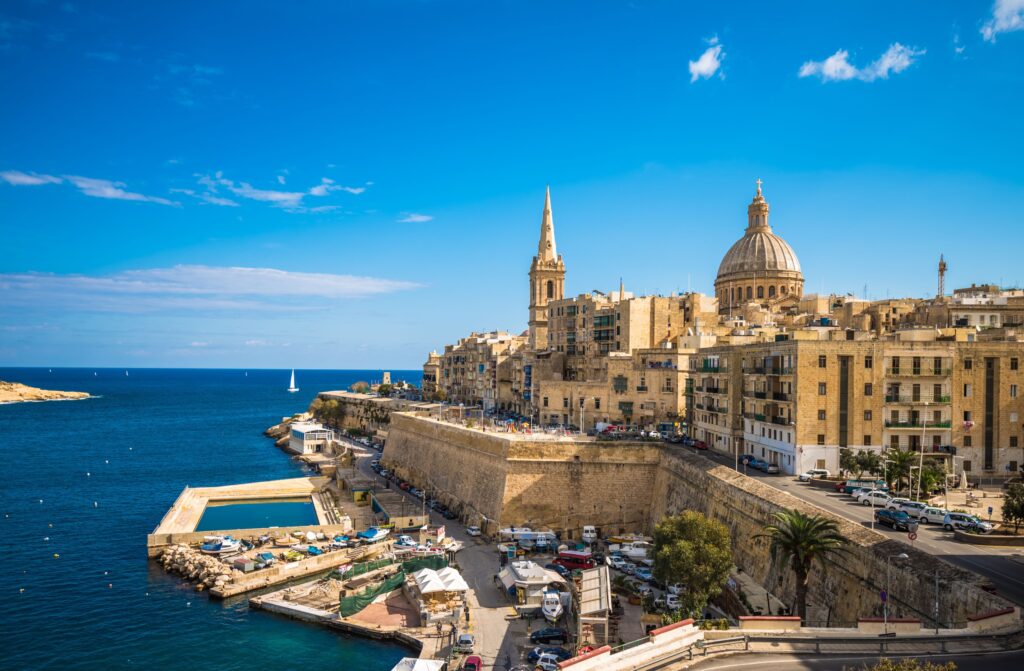
1. Valletta: Where to Stay in Malta for History Lovers and First-Time Visitors
Malta’s capital city is a lively commercial center filled with shops, bars, restaurants, and charming cafés. Full of Baroque architecture, fascinating museums, and breathtaking sea views, Valletta offers a unique blend of history and modern life. The entire city is a UNESCO World Heritage Site, making it a cultural treasure not to be missed. Undoubtedly, it’s an ideal base for first-time visitors who want to be surrounded by culture, history, and easy access to top attractions.
- Best for: History buffs, couples, solo travelers.
- Pros: Walkable, central, great restaurants, rich culture.
- Cons: Limited nightlife, accommodations can be more expensive.
- Example stays: Grand Hotel Excelsior (5★ resort), Hotel Kennedy Nova (budget Hotel)
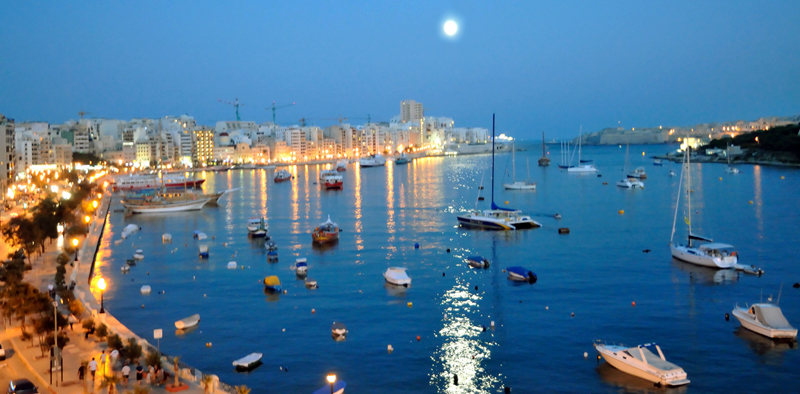
2. Sliema: Best Area to Stay in Malta for Shopping and Sea Views
Sliema is one of Malta’s most modern and vibrant towns, Well known for its shopping centers, scenic seaside promenades, and excellent public transport connections. Additionally, with stunning views of Valletta across the harbor, plenty of cafés and restaurants, and a relaxed yet cosmopolitan vibe, undeniably it’s a popular choice for both locals and travelers. Whether you’re staying short-term or working remotely, Sliema offers convenience and comfort by the sea.
- Best for: Families, digital nomads, long-term travelers.
- Pros: Amazing views, ferry to Valletta, many cafes and restaurants.
- Cons: Busy and modern; lacks historical charm.
- Example stays: Land’s End Boutique Hotel (mid-range), Europa Hotel (budget-friendly)
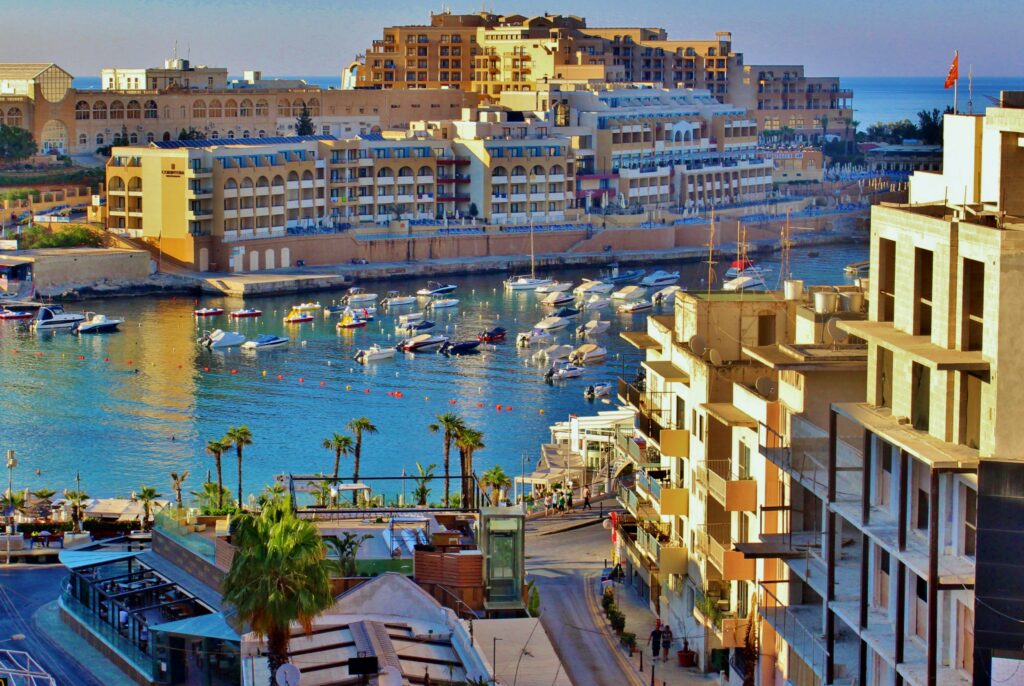
3. St. Julian’s: Best Area to Stay in Malta for Nightlife and Young Travelers
St. Julian’s is Malta’s go-to destination for nightlife, entertainment, and coastal charm. Famous for the lively Paceville district, this area comes alive after dark with clubs, bars, and beach parties. By day, its picturesque bays, seafront promenades, and upscale hotels make it just as appealing. Perfect for young travelers and those seeking energy and fun by the sea.
- Best for: young travelers, party lovers, solo travelers, digital nomads, groups of friends.
- Pros: Lively, lots of bars and clubs, beautiful coast.
- Cons: Can be noisy and crowded at night.
- Example stays: InterContinental Malta (modern 5★), VITA Hotel (budget)
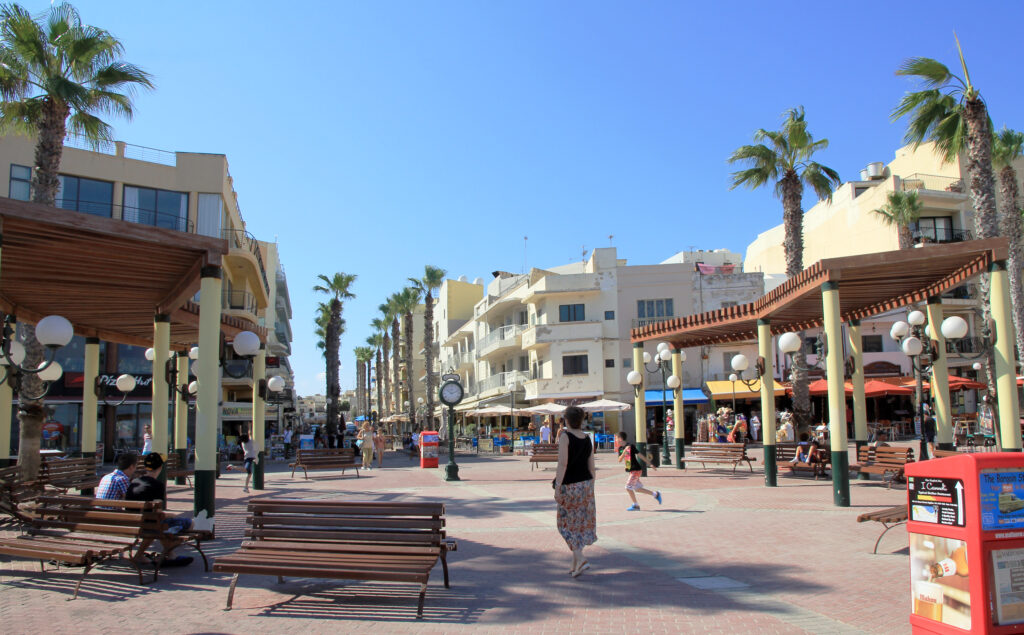
4.Bugibba & Qawra: Best Budget-Friendly Areas to Stay in Malta
Located in the St. Paul’s Bay area in northern Malta, Bugibba and Qawra are popular resort towns offering affordable accommodation and a relaxed seaside atmosphere. You’ll find a long promenade perfect for walks, casual dining spots, family-friendly attractions like the Malta National Aquarium, and easy access to boat tours and bus routes — definitively, making it a convenient base for budget travelers.
- Best for: Budget-conscious families and couples, backpackers and travelers looking for value stays with sea views and good transport access.
- Pros: Economical hotels, family-friendly promenade.
- Cons: Less central, fewer cultural attractions.
- Example stays: Pebbles Resort, Qawra Point Holiday Complex
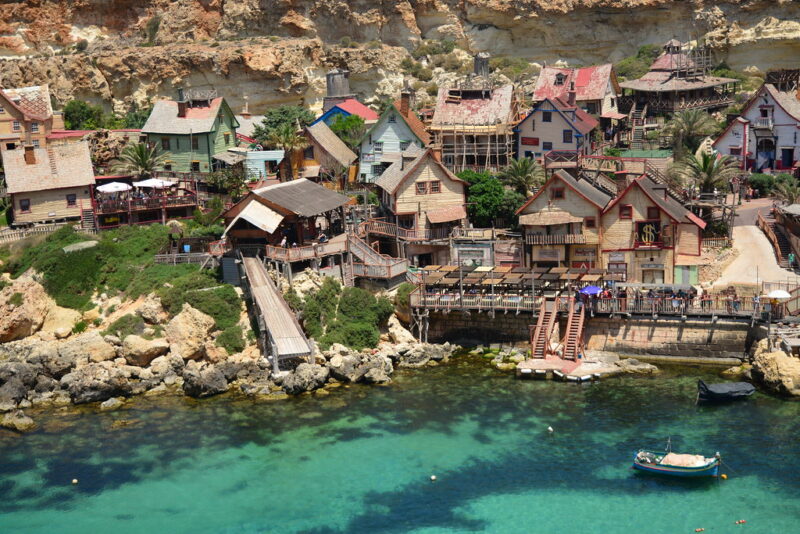
5. Where to Stay in Malta – Mellieħa for Beaches and Family Holidays
Mellieha is a charming hilltop town in the north of Malta, very famous for its laid-back vibe and beautiful coastal views. Additionally, it’s home to Mellieha Bay, the largest sandy beach on the island—perfect for swimming, sunbathing, and water sports.
This area is ideal for families and travelers looking for a more relaxed, nature-oriented stay. Beyond the beach, you can explore Popeye Village, a fun attraction for kids (See more info Here!) , visit the historic Mellieha Parish Church, or take scenic walks through Il-Majjistral Nature and History Park.
- Best for: Families, beach lovers, nature seekers, slow travelers
- Pros: Sandy beaches, relaxing atmosphere.
- Cons: Requires transport for sightseeing.
- Example stays: Solana Hotel & Spa, Pergola Hotel & Spa
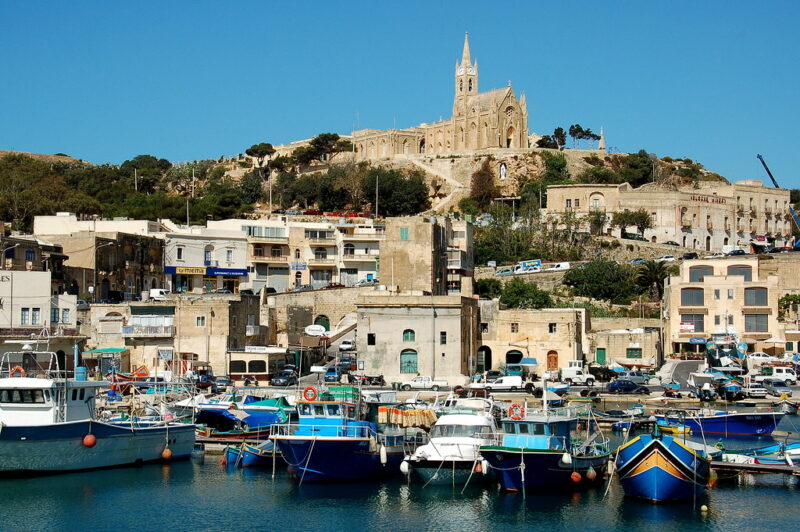
6. Gozo: Best Area to Stay in Malta for a Peaceful Escape
Gozo is Malta’s smaller and greener sister island, offering a slower pace of life, traditional villages, and breathtaking natural landscapes. It’s the perfect destination for travelers seeking peace, authenticity, and outdoor adventures.
Highlights include the impressive Citadel in Victoria, the stunning Ramla Bay with its red sand, and the dramatic cliffs of Dwejra, once home to the iconic Azure Window. Gozo is also a top spot for hiking, diving, and exploring hidden coves.
While it’s quieter than Malta’s main island, Gozo still offers a good selection of restaurants, boutique hotels, and charming farmhouses.
- Best for: Nature lovers, couples, adventure seekers, slow travelers.
- Pros: Scenic landscapes, authentic local feel, peaceful vibe, great diving spots
- Cons: Less nightlife, requires ferry travel.
- Example stays: The Duke Boutique Hotel (Victoria), Maria Giovanna Guest House (Marsalforn Beach)
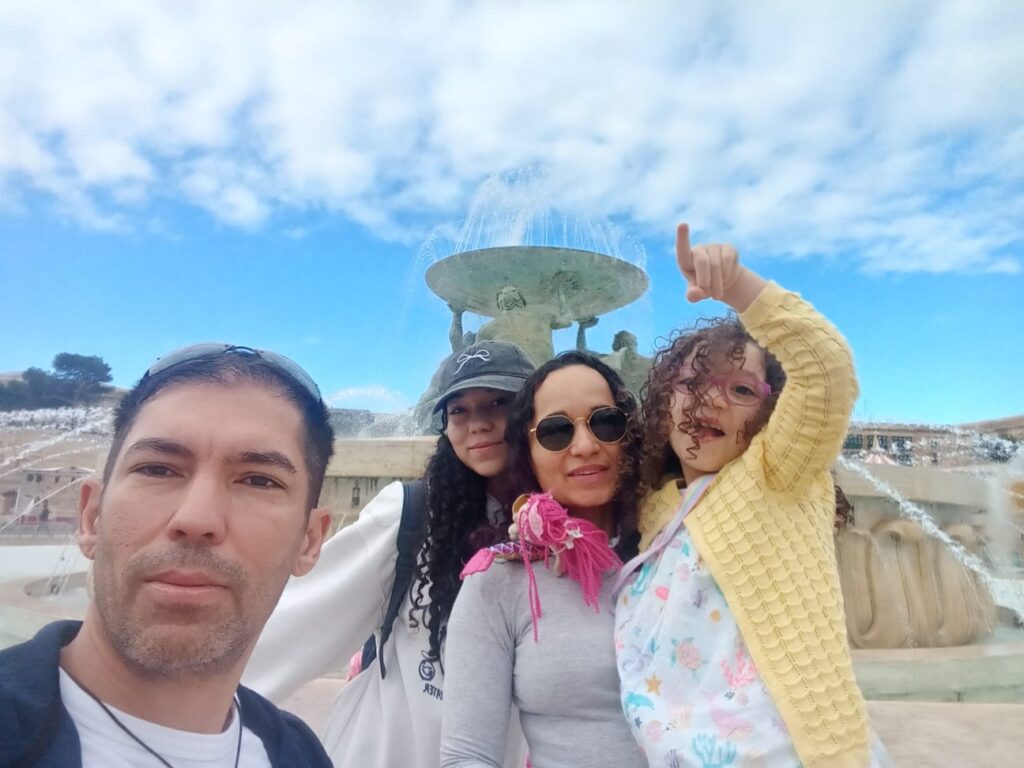
Decided on where to stay in Malta? Now it’s time to plan your trip!
Now that you know the best areas to stay in Malta — whether you’re after history in Valletta, nightlife in St. Julian’s, beaches in Mellieħa, shopping and sea views in Sliema, or a peaceful escape in Gozo — it’s time to plan the practical side of your trip.
Don’t miss our main post How to Travel to Malta on a Budget: Essential Tips — packed with useful advice on saving money, moving around the islands, and making the most of your stay!
 Tips for Booking Accommodation in Malta
- Book early for summer and holidays. Find the best options here!
- Compare Airbnb vs. hotel offers.
- Stay near bus stops for easy island access.
- Read reviews and check for AC in summer.
- Look for breakfast-included deals to save more.
Final Thoughts about where to stay in Malta!
No matter where you stay, Malta’s small size and excellent public transport make it easy to explore the whole country. Pick the area that fits your travel vibe — whether it’s relaxing, adventurous, or cultural — and you’re guaranteed a memorable Maltese adventure!
Want more travel tips?
Download our FREE Malta Travel Guide or check out our main post: How to Travel to Malta on a Budget: Essential Tips.
Need help planning your trip? Contact us for a personalized itinerary tailored to your travel style and interests!
Leave a Reply
O post Where to Stay in Malta: Top Places to Visit on Your Next Trip apareceu primeiro em Viajante Digital.
]]>O post How to Travel to Malta on a Budget: Essential Tips apareceu primeiro em Viajante Digital.
]]>If you’re looking for a safe, fun, and affordable place to travel with kids, then Malta is definitely a great choice. When I visited this beautiful island with my family, I was pleasantly surprised by how much it had to offer. From fascinating historical landmarks to stunning beaches, and from delicious traditional food to a wide range of family-friendly activities — basically everything was accessible and reasonably priced. Whether you’re exploring ancient cities or relaxing by the sea, Malta strikes a perfect balance between culture, comfort, and cost.
In this post, I’ll take you through our full experience in Malta — from where we stayed and what we ate, to the top attractions for families, how we got around, and how much we spent each day. Whether you’re traveling solo or with kids, Malta offers something for everyone and is a destination worth exploring any time of the year.
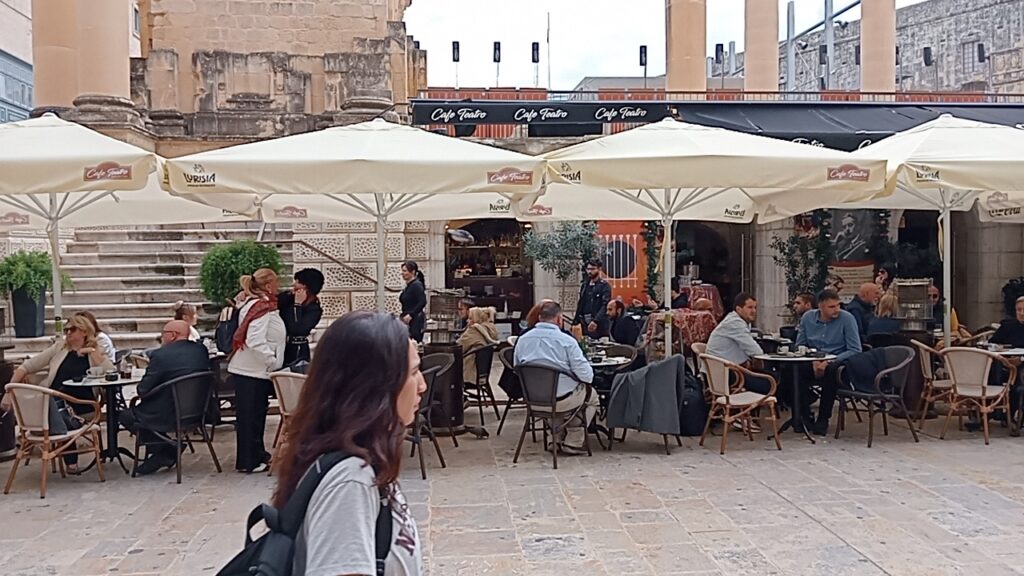
Getting Around, Eating Well, and Exploring Malta on a Budget
One of the best things about Malta is how affordable it is — especially when it comes to transportation, food, and attractions. Whether you’re traveling solo or with your family, you’ll find that Travel to Malta offers great value compared to many other European destinations.
 Transportation in Malta
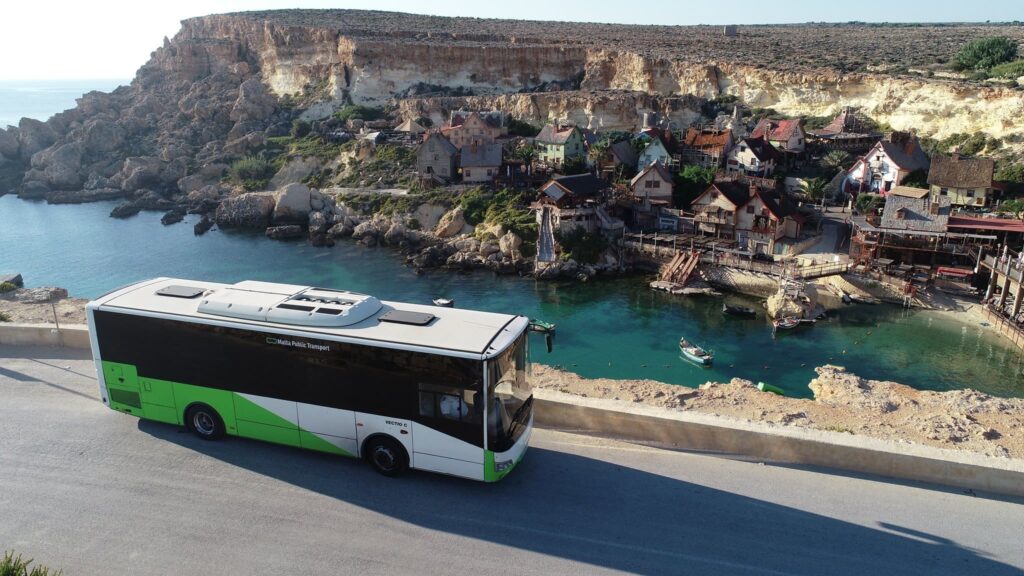
While Malta has a reliable and inexpensive public transportation system, we opted to use Uber most of the time. As a family of four, it was more convenient and still very budget-friendly. Uber rides across the island typically cost between €6 and €12, depending on the distance and time of day.
If you’re planning to use public transport, Malta offers a Tallinja Card, a prepaid travel card for buses that gives you unlimited travel for a certain period. The Explore Card costs around €21 for 7 days and is valid for adults (kids pay less). In other words, Tallinja Card is ideal for travelers who want to move around frequently and save on daily fares.
 Food in Malta: From Street Eats to Local Delicacies
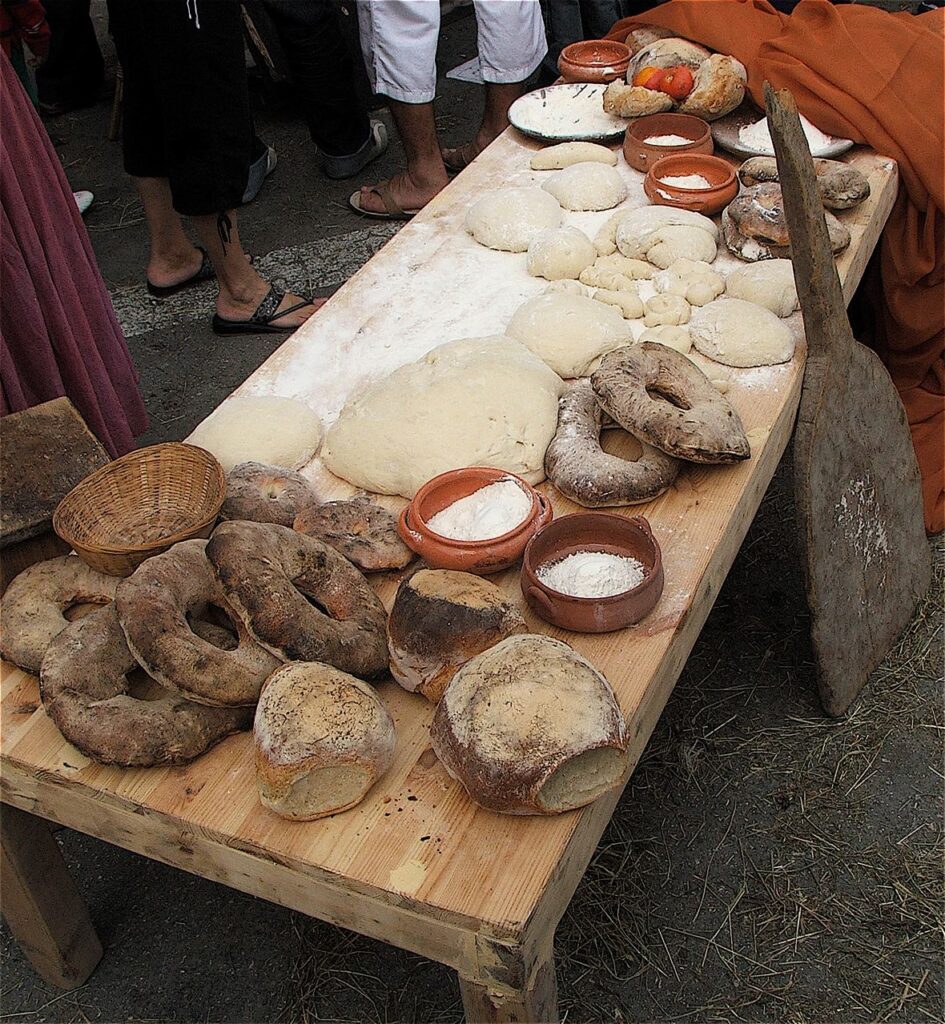
Malta has a wide range of food options to fit every budget. You can grab a filling street meal — like a kebab or wrap for around €5 — or sit down at mid-range restaurants for about €15–€25 per person. For a more upscale experience, seafood and caviar dishes at fine dining spots range from €30 to €60+ per person.
Don’t miss traditional Maltese dishes! One of the most famous is stewed rabbit (fenek), which you can find for around €12–€18 at local restaurants.
My Honest Review of Fenek: Malta’s Famous Rabbit Stew
Every time I travel, I make it a point to try at least one traditional dish — and Malta was no exception. I had the famous rabbit stew, fenek, which is one of the country’s most iconic meals. To be honest, my first impression was that it tasted like chicken… with a hint of rust. 
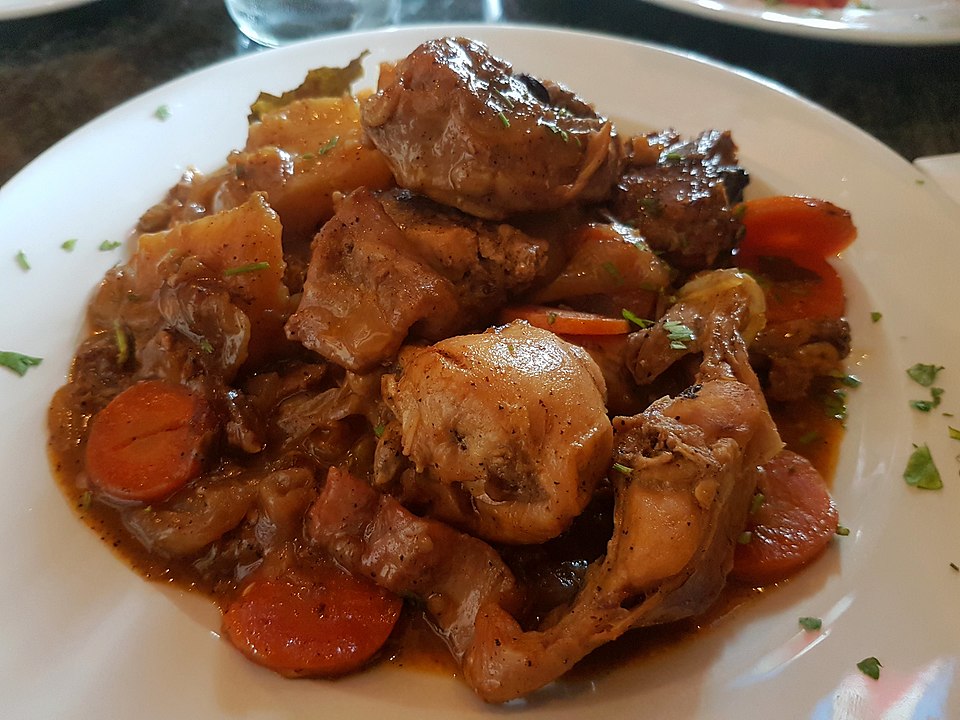
Now, you might be wondering how I know what rust tastes like — don’t worry, I’ve never chewed on rusty metal! But there was definitely a strong, earthy flavor at first. The funny thing is, the more I ate it, the more my taste buds adapted, and it actually started to taste pretty good.
Another must-try is pastizzi, a flaky pastry usually filled with ricotta or peas — and it costs just €0.50 to €1 each, making it perfect for a cheap and tasty snack.
Walk, taste, and fall in love with Valletta – Your cultural street food adventure starts here!
Attractions: Free and Paid Experiences for All

Malta is full of attractions for all types of travelers — and many are free or very low-cost.
Here’s a general idea:
- Paid attractions:
- Ġgantija Temples (Gozo) – €10 – You can also enjoy a day Trip in Gozo by clicking here!
- St. John’s Co-Cathedral (Valletta) – €15 – See walking tour in Valletta!
- Hal Saflieni Hypogeum – €35 – See official website!
- Boat tours to Blue Lagoon – from €15 per person – See options here!
- Free or very low-cost attractions:
- Exploring Mdina, the Silent City – See Mdina and Rabat Insider’s Tour
- Relaxing at Blue Lagoon (Comino) – free access, only pay for transport
- Walking tours in Valletta or along the Sliema promenade – See Self-Guided Audio Tour
- Visiting public beaches and scenic coastal trails
In general, entrance fees in Malta are lower than in many other European countries, making it an ideal destination for families or conscious traveller that are planning to travel to Malta on a budget.
Want a complete list of Malta’s top attractions — both free and paid?
Download our FREE Malta Travel Guide and discover the best experiences for every budget! Includes must-see sights, hidden gems, local tips, and more. [Download your free guide here]
Budget vs Luxury Accommodations in Malta
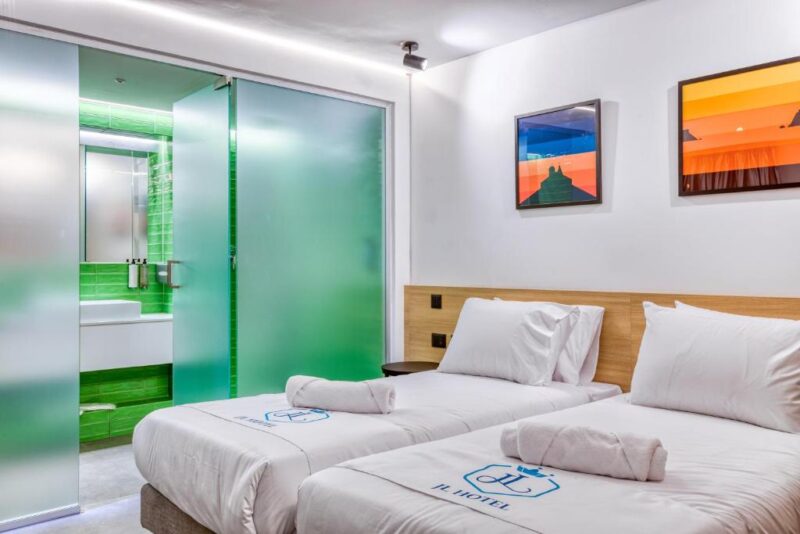
During our trip, we stayed in budget-friendly accommodations, which were clean, central, and comfortable for families. You can find guesthouses or 3-star hotels from €30–€80 per night for a double room. If you’re traveling as a group or with kids, apartments or Airbnbs can also offer excellent value, especially when booked in advance.
For travelers looking for a luxury experience, Malta also offers high-end resorts and boutique hotels. Generally, rates for premium stays typically start at €150 per night and can go up to €400+ for all-inclusive packages by the sea.
My Experience at a Budget Hotel in St. Julian’s

During my time in Malta, I stayed in a variety of places — from a rustic stone house in Gozo to a spacious apartment in Valletta. But one experience that really stood out was a budget hotel in St. Julian’s that completely surprised me.
When I arrived at the reception, I was honestly confused — it looked more like a lively restaurant than a hotel. There were lots of people eating, drinking, music playing, and waiters running around. I had to ask someone if I was in the wrong place! To my surprise, they smiled and said, “No, you’re in the right place — we’re just having a party today, and all guests are welcome!”
After checking in, I dropped off my bags and joined the fun. I ate, drank, and enjoyed the atmosphere — I still remember the giant olives, almost the size of an egg! The hotel also had a rooftop pool with a stunning view and a full breakfast buffet with a wide variety of options in the morning. And the best part? I paid only €35 per night for all of this – See Budget Hotel Options!
This experience is a great example of how budget accommodation in Malta can still offer comfort, charm, and unforgettable memories — proving that you don’t need to spend a fortune to enjoy your stay on the island.
Whichever your budget, it’s best to book early — especially if you’re visiting during school holidays or summer.
 Best Activities in Malta for Families

Traveling with kids? Malta is full of family-friendly activities. Here are a few favorites:
- Playmobil FunPark – fun for younger kids, tickets start around €10
- Popeye Village – quirky and scenic, especially for photos; entrance from €15–€20 – See Tickets!
- Boat rides to Comino (Blue Lagoon) – crystal clear water perfect for swimming – See Tickets!
- National Aquarium – educational and entertaining, tickets around €13 – See Tickets!
- Public playgrounds and beaches – free, clean, and safe
Malta is small and easy to navigate, making it perfect for short day trips with children.
 How Much Does a Trip to Malta Cost Per Day?
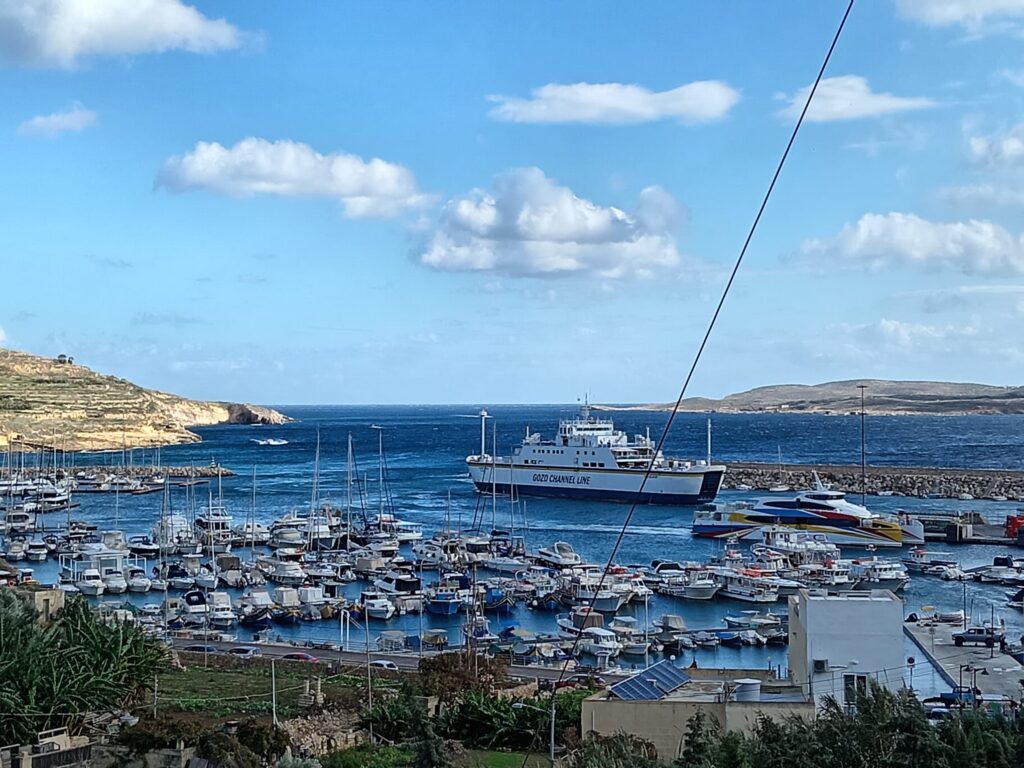
Here’s a rough breakdown of what you can expect to spend per person per day:
- Budget traveler: €50–€80 (hostel/cheap guesthouse, public transport, meals at local eateries)
- Mid-range traveler: €80–€150 (comfortable hotel or Airbnb, Uber rides, some paid attractions)
- Luxury traveler: €200+ (resort stays, fine dining, private tours)
Families can often reduce per-person costs by sharing accommodation and transportation.
Malta Multi Pass: The Ultimate Budget-Friendly Way to Explore Malta!
Get unlimited access to hop-on-hop-off buses, entry to over 20 museums and heritage sites, and amazing experiences like Captain Morgan’s Grand Harbour Cruise and the stunning Blue Lagoon in Comino. With flexible 3- or 6-day options, the Malta Multi Pass lets you see the best of Malta while saving money and hassle.
Ready to make the most of your Malta trip? Get your Malta Multi Pass here!
Top Malta Travel Tips
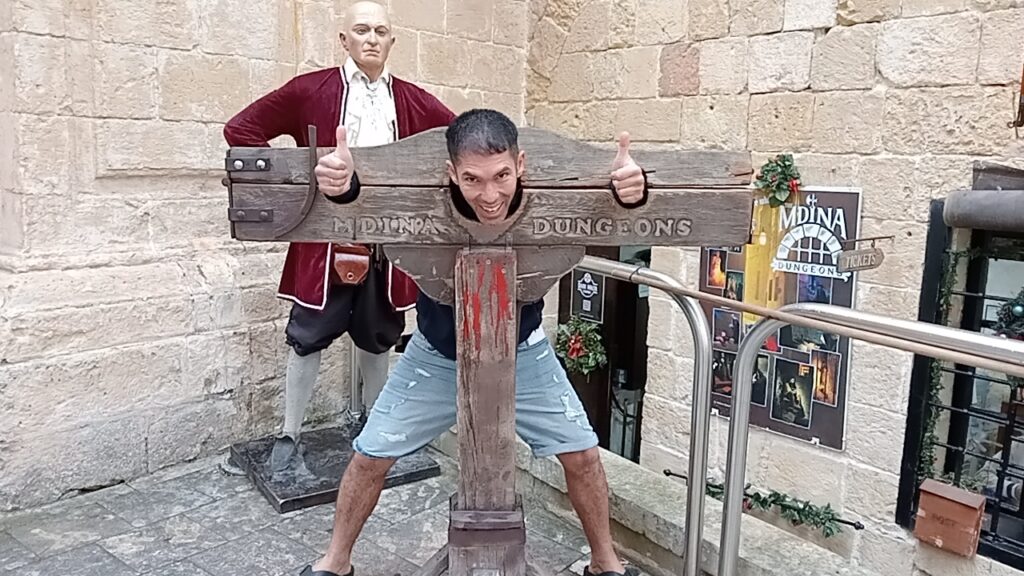 Exploring the dungeons of Mdina
Make the most of your trip to Malta with these practical and family-friendly suggestions:
 Travel to Malta in the Shoulder Seasons or Winter
Visit from April to June, September to October, or even during winter (November to February) when it’s not too hot, to enjoy cheaper prices, fewer crowds, and a more peaceful atmosphere.
 Pack Sunscreen
Malta is sunny most of the year — even in the off-season!
 Carry a Reusable Water Bottle
Tap water is safe to drink, and it helps you save money while staying hydrated on the go.
 Wear Comfortable Shoes
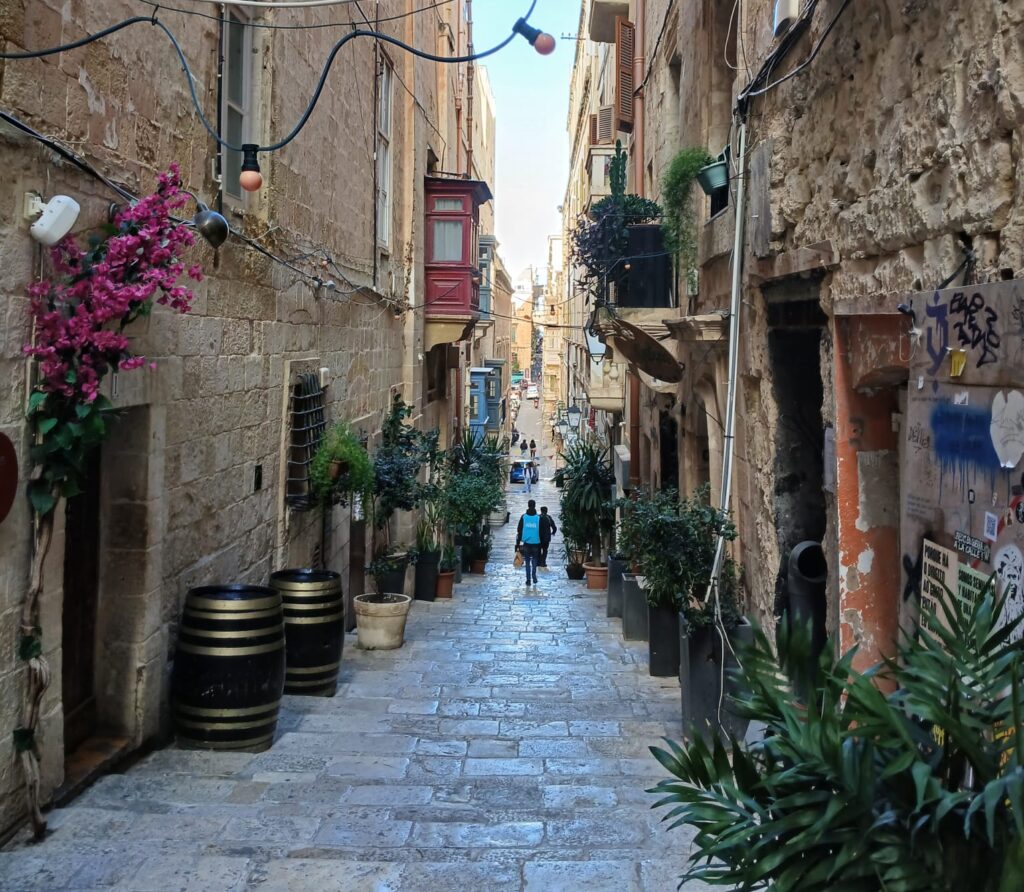
Historic towns like Valletta and Mdina have cobblestone streets and hills. Walking is part of the adventure!
Use Public Transport or Ride-Sharing Apps
Public buses are budget-friendly, but for families, Uber and Bolt are also affordable and more convenient. Expect to spend around €10–15 per day on transport.
 Learn a Few Maltese Phrases
Locals speak English, but greeting them with “Merħba” (Welcome) or “Grazzi” (Thank you) goes a long way.
Keep Some Cash with You
While most places accept cards, small markets and local street food vendors might only take cash.
 Book Tickets in Advance
Especially for Gozo/Comino ferries and popular sites like St. John’s Co-Cathedral or the Ħal Saflieni Hypogeum.
 Taste Local Snacks
Don’t miss pastizzi (cheese or pea-filled pastries), ftira (Maltese pizza bread), and traditional Maltese bread served with local olives and cheese.inal Tips and Travel Resources
Looking to explore Malta your way?
Check out our custom itinerary services and free travel guides:
- Where to Stay in Malta. Find the best places!
- More Travel Stories on the Blog
- Request a Custom Itinerary
- Free Malta Travel Guide
- Explore Malta in Google Earth!
 FAQs About Traveling to Malta
Is Malta safe for tourists?
Yes, Malta is one of the safest destinations in Europe for families and solo travelers alike.
How much does a trip to Malta cost per day?
Budget travelers can spend as little as €50/day, while mid-range travelers spend around €100/day.
What’s the best time to visit Malta?
Spring (April–June) and Fall (September–October) offer ideal weather and fewer crowds.
Is Malta good for families with kids?
Absolutely! There are beaches, parks, fun attractions like Popeye Village, and safe, walkable towns.
Do I need a car to get around Malta?
Not necessarily. Public transport is good and Uber is cheap, especially for families.
Can I visit Gozo and Comino on a day trip?
Yes, both islands are easily accessible via ferry or boat tour from Malta.
What You Need for a Smooth Trip to Malta: Essential Travel Checklist
Planning a trip to Malta? Here’s a practical checklist to ensure a stress-free experience from start to finish:
Travel Documents
- Passport – Must be valid for at least 6 months beyond your travel dates
- Visa – Not required for stays up to 90 days for many nationalities
- Proof of return or onward travel – Might be requested upon arrival
Travel Essentials
- Get travel insurance – Covers medical issues, delays, lost luggage & more. Don’t travel without it!
- Book flights in advance – Best prices for early planners
- Reserve your airport transfer – Stress-free ride directly to your hotel
- Hotel bookings confirmed – Have digital or printed copies ready
Money & Payments
- Credit/Debit card – Accepted almost everywhere
- Cash in euros (€) – Useful for small purchases, markets, buses
- Optional: Prepaid travel card – Great for budgeting and avoiding foreign transaction fees
Connectivity & Apps
- Buy a local SIM card or eSIM – Stay connected affordably
- Google Maps + Google Translate – Essential for exploring & communicating
- Download Tallinja app – For real-time public transport info
What to Pack
- Reusable water bottle – Malta is sunny, stay hydrated
- Sunscreen & sunglasses – Even in winter, Malta gets a lot of sun
- Comfortable shoes – You’ll walk a lot, especially in historic areas
- Adapter plug – Malta uses Type G (UK-style, 3-pin plugs)
Local Transportation
- Tallinja Explore Card – Unlimited bus rides across Malta & Gozo
- Uber & Bolt apps – Cheaper and easier than taxis for families
- Optional: Rent a car – Especially handy for exploring Gozo
Tip: Save or print this checklist so you won’t forget anything important!
Bonus: Want a ready-to-go plan? Download your FREE Malta Travel Guide here
Love cultural travel? Don’t miss our deep dive into Malta’s fascinating past — from ancient temples to WWII stories. Check out our full post on Malta’s history here and discover the island’s most iconic historical sites!
Leave a Reply
O post How to Travel to Malta on a Budget: Essential Tips apareceu primeiro em Viajante Digital.
]]>O post What to Do in Rome: Discover the Best Tourist Attractions! apareceu primeiro em Viajante Digital.
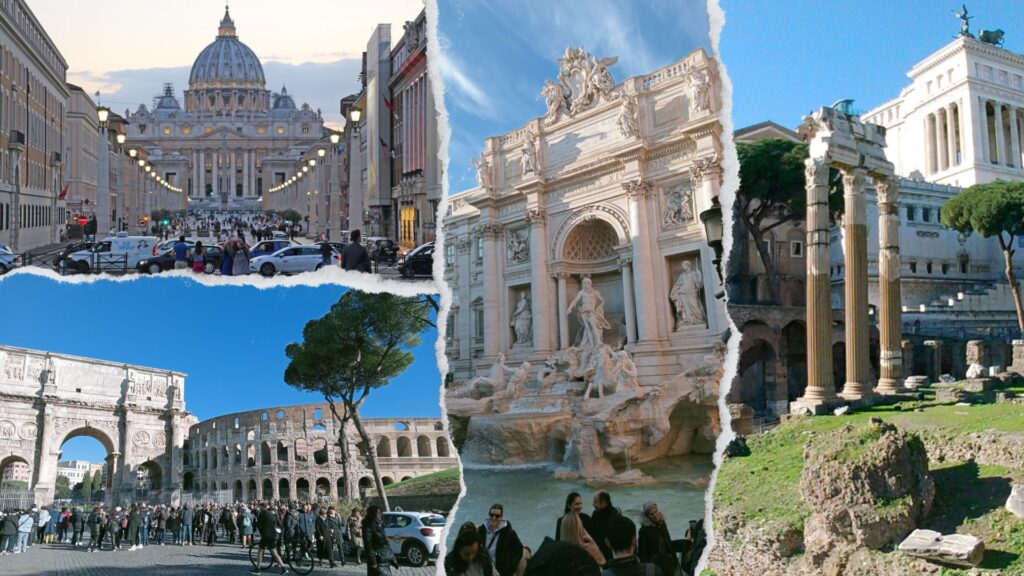
]]>Rome, the Eternal City, is a living museum that captivates visitors with its rich history, stunning architecture, and vibrant culture. From ancient ruins to Renaissance art, every corner tells a story, inviting you to step back in time and immerse yourself in its fascinating past. As you explore, you’ll encounter iconic landmarks that have shaped the course of history, as well as hidden gems that reveal the city’s lesser-known beauty. In this guide, we’ll take you through some of the must-see attractions in Rome, ensuring that your visit is nothing short of unforgettable.
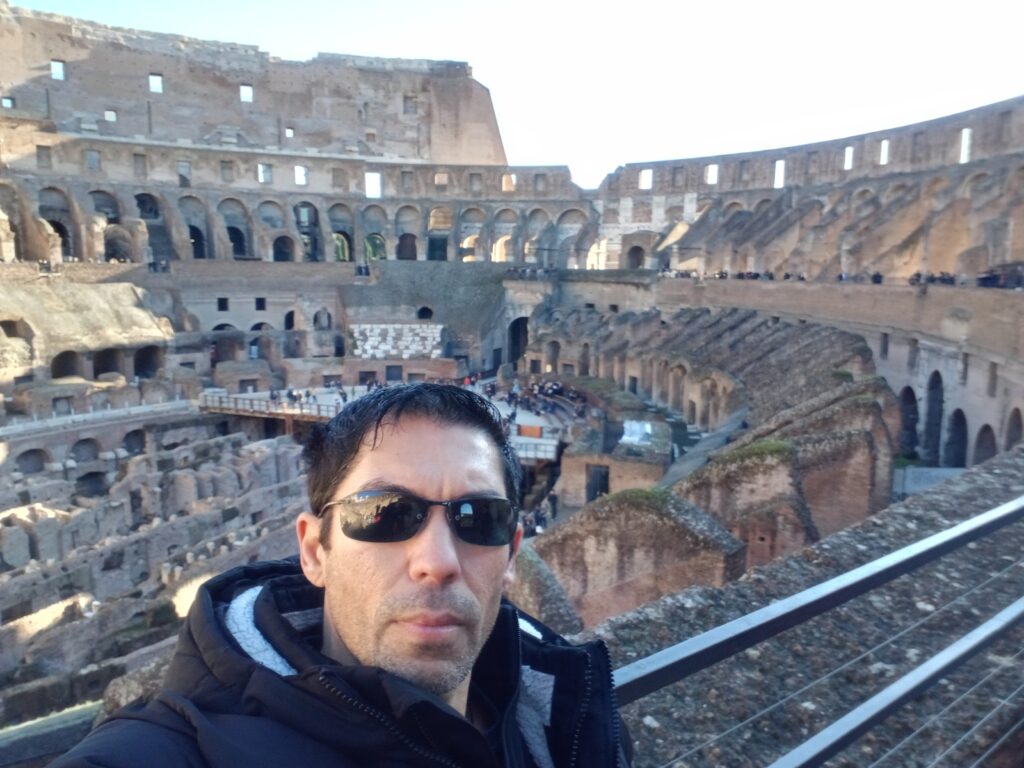
The Colosseum
This impressive monument not only amazes but also mesmerizes visitors with its imposing grandeur. As you approach the majestic ruins, the magnitude of the Colosseum reveals itself as an immortal testament to the grandeur of Ancient Rome.
The grandeur of the Colosseum lies not only in its impressive architecture, but also in the rich narrative it embraces. By exploring these ruins, you find yourself before a theater that not only hosted the famous gladiatorial games but also played a crucial role in the politics of the time. The Colosseum was an arena that served as a stage for the strategy of ‘bread and circuses.’ As a result, politics mixed with entertainment to keep the people entertained and subdued, making them forget the daily hardships in which society was immersed.
When entering the Colosseum, you not only witness the splendor of magnificent architecture but are transported to a time when the roar of the crowd echoed as gladiators faced their destinies, and politics were woven into the plots of entertainment. Certainly, this is more than a visit to an ancient monument; it is an immersive experience, a journey through the pulsating heart of Ancient Rome, where grandeur was measured not only in stones but in epic stories that echo through the centuries.
Secure Your Ticket!
Purchasing tickets in advance not only provides faster access but also allows for a deeper immersion into the historical magnitude of this magnificent monument. Secure your spot now and explore the Colosseum like a true Roman! Click here to get your Colosseum tickets.
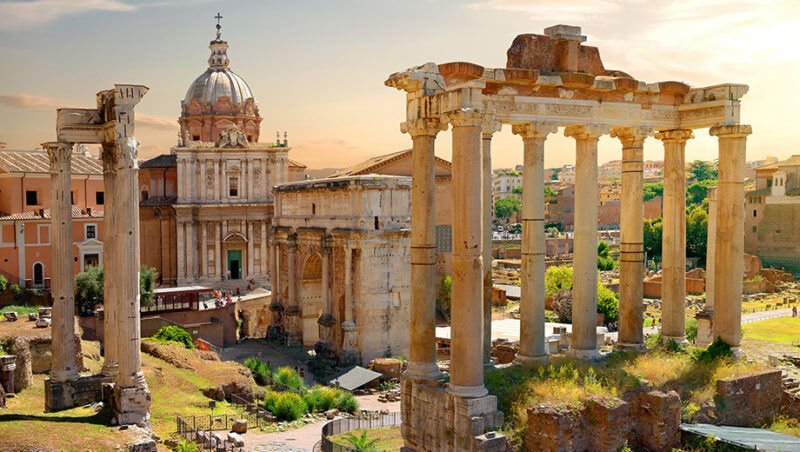
The Roman Forum and Palatine Hill
Amidst the ruins of grand Ancient Rome, a historical and architectural treasure awaits discovery: the Roman Forum. This is an invitation to embark on a journey through time, where each stone tells a story and each column is a silent witness to a splendid era.
Upon entering the Roman Forum, you will encounter a spectacle of grandeur and beauty. The ancient ruins, carefully preserved, reveal the magnificence of the political, social, and commercial center of Ancient Rome. Moreover, with each step, you will be enveloped by the unique atmosphere that permeates the site, delving into history that dates back to the days when rulers, philosophers, and ordinary citizens shaped the city’s destiny
The beauty of the Roman Forum lies not only in its majestic structures, such as the Temple of Saturn and the Basilica of Constantine, but also in the immersive experience of walking the same paths that legendary historical figures once tread, where each stone is a time capsule, transporting you to an era of glory and achievements.
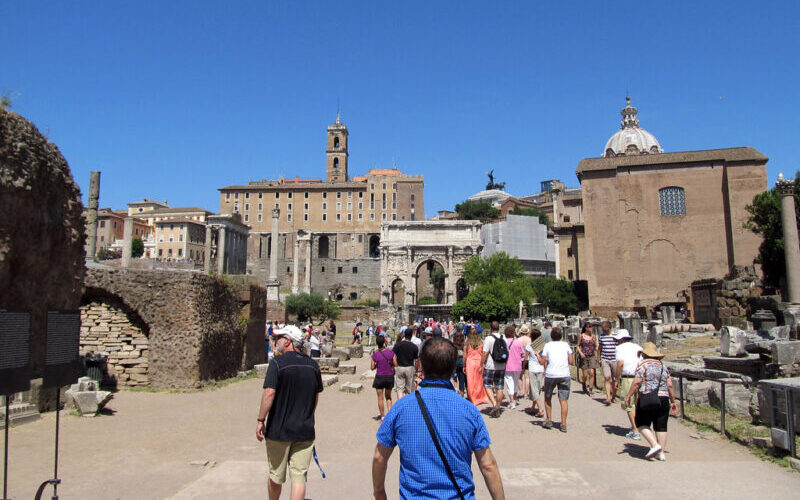
Take a Pleasant Walk in the Roman Forum!
Beyond the historical richness, exploring the Roman Forum is a pleasant and enriching walk. The serene atmosphere among the columns and arches creates a perfect environment for reflection, while the panoramic view of the city from Palatine Hill is simply stunning. So why not enjoy a stroll that transcends mere observation and allows you to connect intimately with history!
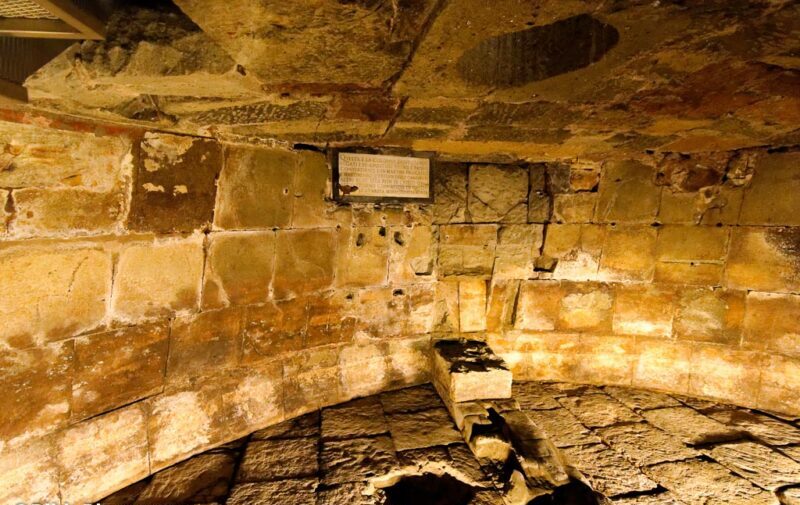
Visit the Prison of Apostles Saint Paul and Saint Peter
The Mamertine Prison, located in the heart of ancient Rome, is much more than just a stone structure. In fact, its walls breathe the stories of legendary figures like the apostles Paul and Peter, who, according to tradition, were imprisoned here. This prison has become a symbol of Christian resistance, a fundamental piece in the narrative of the expansion of Christianity in Ancient Rome.
Therefore, walking through these ancient cells, you encounter an environment that transcends centuries, where the feeling of being in the same place where historical figures were imprisoned creates a palpable connection with the past. Imagine yourself in the shoes of Apostle Paul, writing epistles that would echo through time, or Apostle Peter, whose presence here became a symbol of resistance and faith.
 Ensure a hassle-free experience by purchasing your tickets in advance, and enjoy your time dedicating yourself to knowing and understanding the historical riches of these unique moments. Book your visit to one of the most meaningful and spiritual places in Rome. Click here to get your Mamertine Prison tickets.
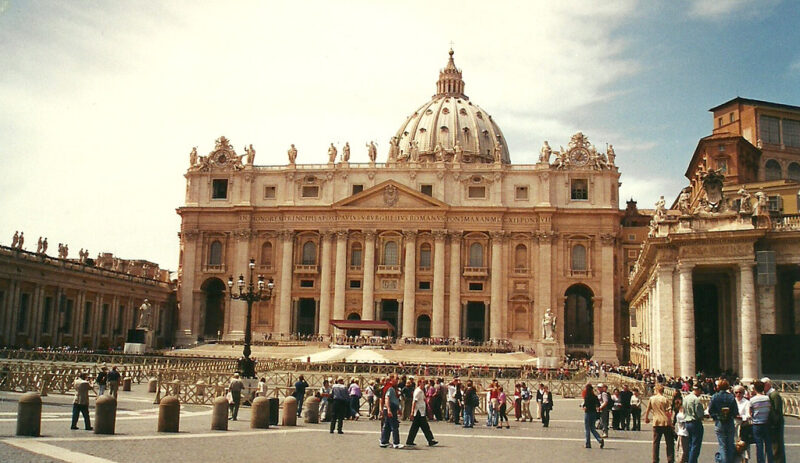
The Vatican
The cultural, architectural, and spiritual richness of the Vatican offers a unique immersion into the traditions and influences that have shaped humanity over the centuries. Furthermore, in every corner, you will find a captivating story that reveals the greatness of the past and the continuity of faith. So keep reading this post and see the attractions that await you in the Vatican!
St. Peter’s Basilica: The Grandeur of Faith and Architecture
Upon entering the majestic St. Peter’s Basilica, you will be enveloped by an aura of spirituality and architectural magnificence. The imposing pillars, immortal sculptures, and the grandeur of the dome designed by Michelangelo are witnesses to a faith that transcends centuries.
Sistine Chapel: A Treasure of Art and Beauty
Upon entering the majestic St. Peter’s Basilica, you will be enveloped by an aura of spirituality and architectural magnificence. The imposing pillars, immortal sculptures, and the grandeur of the dome designed by Michelangelo are witnesses to a faith that transcends centuries.
Vatican Museums: A Journey Through the Ages
The Vatican Museums are a parade of artistic and cultural treasures. Each room reveals masterpieces that span from classical antiquity to the Renaissance, offering a complete and awe-inspiring experience.
 Avoid wasting precious time in long lines — buy your tickets online and enjoy skip-the-line access to one of the most extraordinary collections of art and history in the world.
 Secure your entry now and explore the Vatican at your own pace! Click here to book your Vatican Museums tickets.
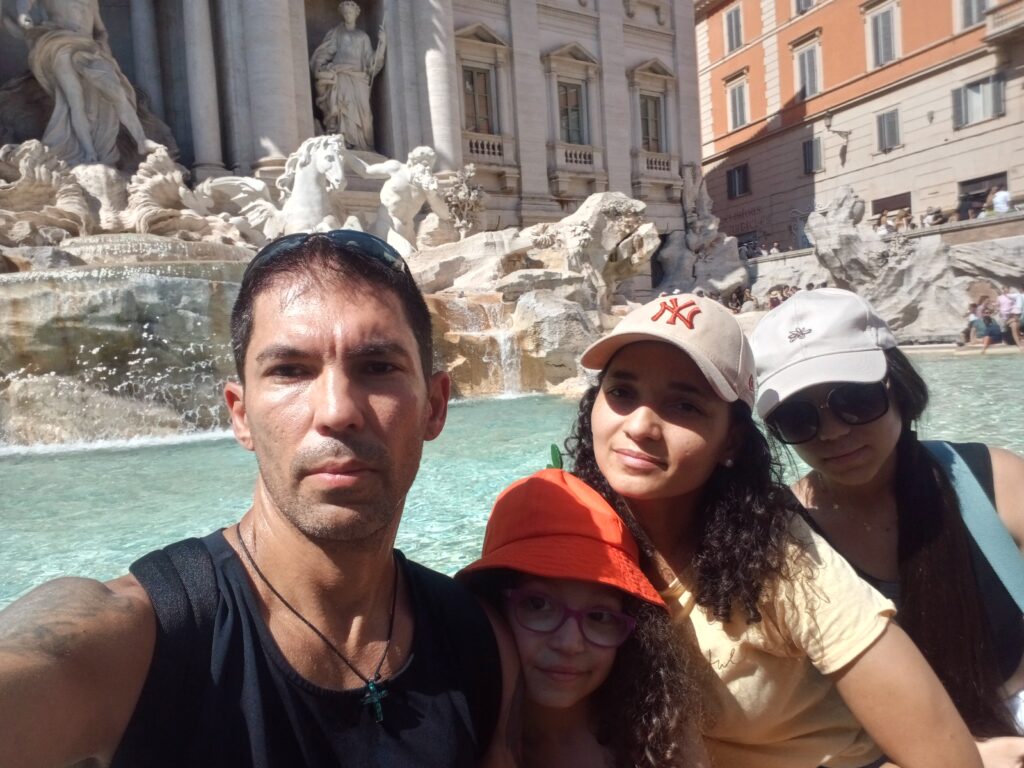
Trevi Fountain: A Wish in the Eternal City
No trip to Rome is complete without a visit to the iconic Trevi Fountain. This stunning Baroque masterpiece, with its mythological figures and cascading waters, is more than just a photo stop — it’s a timeless tradition. In addition, legend says that if you toss a coin over your left shoulder with your right hand, you’ll be guaranteed to return to Rome
 Surrounded by centuries of history and romance, the Trevi Fountain is one of the most magical spots in the city.
 Want to learn more about its hidden stories and nearby gems? Join a free walking tour and discover the heart of Rome with a local guide!
 It’s a fun and informative way to explore the city — and it’s totally free (just tip your guide!). Click here to book your free walking tour in Rome.
Get a Complete Rome Travel Guide
Now that you know what to do in Rome, it’s time to start planning your adventure. With so many incredible tourist attractions waiting to be explored, every moment in the Eternal City will be unforgettable
Before you go… I know this post isn’t complete — there are still so many amazing attractions and tips I want to share with you. But with my bags half-packed and another adventure just around the corner, I had to put this together a bit in a hurry!
“Still, because I love giving my readers the full picture when it comes to planning unforgettable trips, I’ve put together a Complete Rome Travel Guide with all the info you need — from must-see sights and ticket tips to transport and food recommendations. If you’re wondering what to do in Rome, this guide will cover all the essential attractions, ensuring you don’t miss any of the city’s iconic landmarks.”
Click here to get your full Rome travel guide! See you on the next trip.
Leave a Reply
See Post: How to travel to Malta on a Budget – Essential Tips
O post What to Do in Rome: Discover the Best Tourist Attractions! apareceu primeiro em Viajante Digital.
]]>
Leave a Reply