
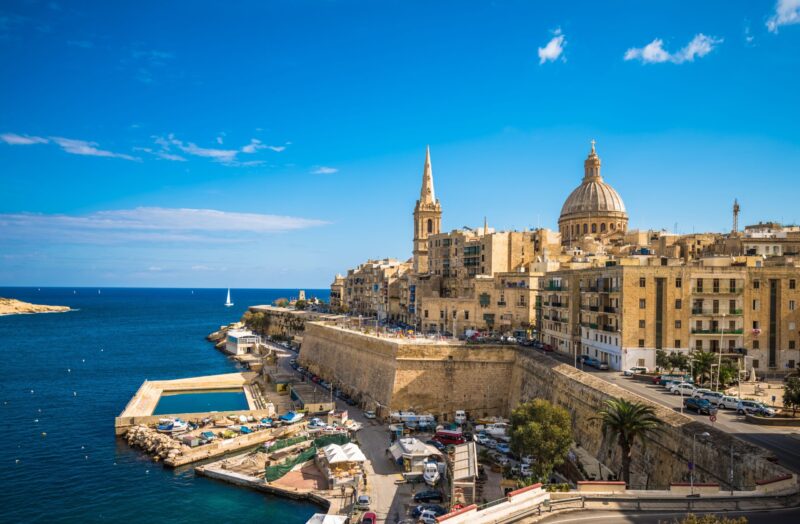
🇲🇹 Malta may be just a small island, but its history is truly monumental and captivating . With over 7,000 years of human presence and three UNESCO World Heritage Sites — The majestic capital Valletta, the mysterious underground Ħal Saflieni Hypogeum, and the awe-inspiring Megalithic Temples make Malta more than just a living museum — it’s an open book where you can immerse yourself in history and watch the past come alive.
Over the centuries, the archipelago has been influenced by a mosaic of civilizations, including the Phoenicians, Romans, Arabs, the Knights of St. John, the French, and the British. As a result these layers of history have shaped not only Malta’s architecture and traditions, but also its unique charm.
If you’re passionate about culture and history, Malta is an open-air history book — and every corner you explore reveals a new chapter.
📖 In this post, you’ll journey through Malta’s rich past and uncover the must-visit historical sites that make this Mediterranean island an unforgettable destination for cultural travelers.
🏰 Mdina – The Silent City Frozen in Time

Perched on a hilltop in central Malta, Mdina — often called The Silent City — is a beautifully preserved medieval town that once served as the island’s capital. Its roots date back over 4,000 years, making it one of the oldest continuously inhabited places on the island.
Originally founded by the Phoenicians around the 8th century BC and later expanded by the Romans, Mdina then became a strategic and administrative center. When the Normans arrived in the 11th century, they fortified the city with the high walls that still surround it today. Mdina’s significance as a capital and administrative center declined following the arrival of the Knights of St. John in the 16th century, — However, even today, its noble palaces, churches, and narrow alleys remain untouched by modern development.
Malta History: Mdina Dungeons Museum
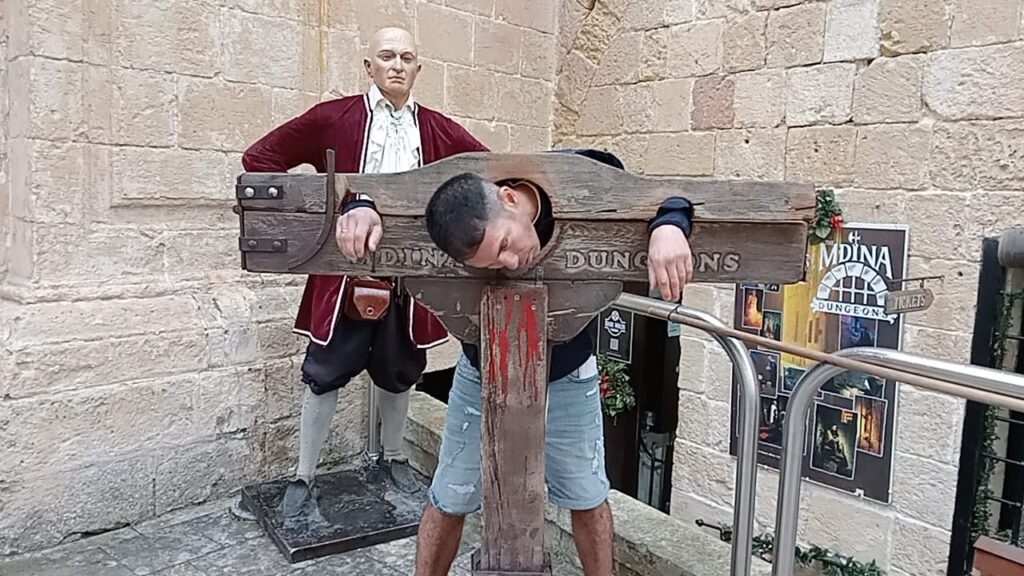
One of the town’s most fascinating attractions is the Mdina Dungeons Museum, located beneath the historic Vilhena Palace near the city gate. This museum offers a gripping look into Malta’s darker past through wax figures and atmospheric chambers that recreate scenes of torture, imprisonment, and punishment from different historical periods — including the Roman era, the Inquisition, and the rule of the Knights.
Don’t miss:
- The Baroque-style St. Paul’s Cathedral, built on the site where the Apostle Paul is said to have met the Roman governor.
- The sweeping views from the bastion walls, offering panoramas of much of the island.
- Quiet, lantern-lit streets that make Mdina especially magical in the evening.
- Highlights:
- Mdina Gate (featured in Game of Thrones)
- St. Paul’s Cathedral
- Palazzo Falson Historic House Museum
- Tip: Visit in the early morning or evening for fewer crowds and magical golden light.
Whether you’re a history lover, photographer, or simply a curious traveler, Mdina is a must-visit — a city that feels like stepping straight into the past.
📌 Plan Your Visit to Mdina – Top Tips
- 🏰 Book a guided walking tour of Mdina, Malta’s Silent City: Learn about Mdina’s medieval history, noble families, and hidden gems with a certified local guide. Book your Mdina historical tour now.
- 🛏️ Looking for where to stay in Mdina or Rabat? Discover the best hotels and guesthouses in and around Mdina, perfect for travelers seeking charm and quiet. See top-rated Mdina accommodations here.
- 🌙 Why visit Mdina at night? Explore the peaceful, candle-lit streets after sunset when the day-trippers are gone. Find the best evening experiences in Mdina. See also: The Knights of Malta Museum Entry Ticket.
⚔️ The Three Cities – Birgu, Senglea, and Cospicua

Long before Valletta rose as Malta’s capital, the area known today as The Three Cities — Vittoriosa (Birgu), Senglea (L-Isla), and Cospicua (Bormla) — served as the original stronghold of the Knights of St. John upon their arrival in 1530. These fortified cities, nestled around the Grand Harbour, are among the most historically significant places in Malta and offer an authentic and breathtakeing glimpse into the island’s rich military and maritime heritage.
Birgu (Vittoriosa) is the oldest and most historically rich of the three. It became the headquarters of the Knights and home to the Auberge de Castille, the Inquisitor’s Palace, and the Fort St. Angelo, a key bastion in defending Malta during the Great Siege of 1565 against the Ottoman Empire. Walking its quiet alleys feels like stepping into a living museum.
Senglea and Cospicua, both heavily fortified during the time of the Knights, were later rebuilt after extensive damage in World War II. Today, they retain their local charm, with narrow lanes, traditional Maltese balconies, and spectacular views over the harbour and Valletta.
Unlike more tourist-heavy spots, The Three Cities offer a charming view and a peaceful immersive atmosphere. Here, you can enjoy an espresso in a quiet piazza, explore centuries-old churches and bastions, or stroll along the marina filled with historic boats and luxury yachts.
Malta History – Must-see highlights:
- Fort St. Angelo in Birgu
- The Maritime Museum
- The Inquisitor’s Palace
- Senglea’s Gardjola Gardens, with stunning views of the Grand Harbour
- Narrow alleyways with colorful doors and traditional Maltese balconies
- Tip: Take a traditional dgħajsa boat across the Grand Harbour for a scenic arrival.
For travelers seeking a deeper, less commercialized connection to Malta’s past, The Three Cities are a hidden gem not to be missed.
📌 Extra Tips for Your Visit to The Three Cities
- 🏛️ Book your historical tour of The Three Cities: Discover fortresses, hidden stories, and rich heritage with a local guide. Click here to explore tour options.
- 🛏️ Thinking of staying in The Three Cities? Experience authentic Malta away from the crowds. Check the best hotel options here.
- 🗺️ Prefer to explore on your own? Use our interactive map to find the top historical spots across the area. Access the map here.
🕳️ Ħal Saflieni Hypogeum – A Prehistoric Wonder
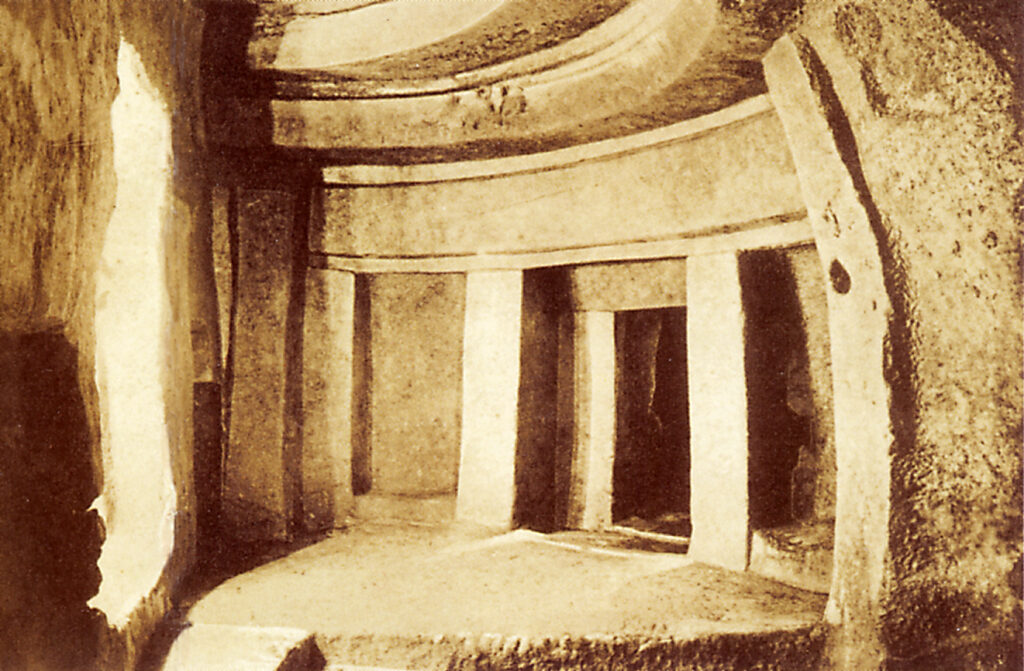
Hidden beneath the streets of Paola lies one of the world’s most extraordinary and mysterious archaeological sites — the Ħal Saflieni Hypogeum, a UNESCO World Heritage Site dating back to around 4000 BCE. This subterranean necropolis, carved entirely out of limestone, served as both a temple and a burial chamber, it’s believed to have housed the remains of over 7,000 individuals.
What makes the Hypogeum truly unique is its advanced engineering and spiritual significance. The chambers are arranged on three levels, with precise acoustics and intricate carvings that show a deep understanding of architecture and ritual. One of its most mysterious features is the “Oracle Room,” where a deep voice echoes with a powerful resonance due it’s exceptional acoustics— a phenomenon believed to have been used during ancient ceremonies.
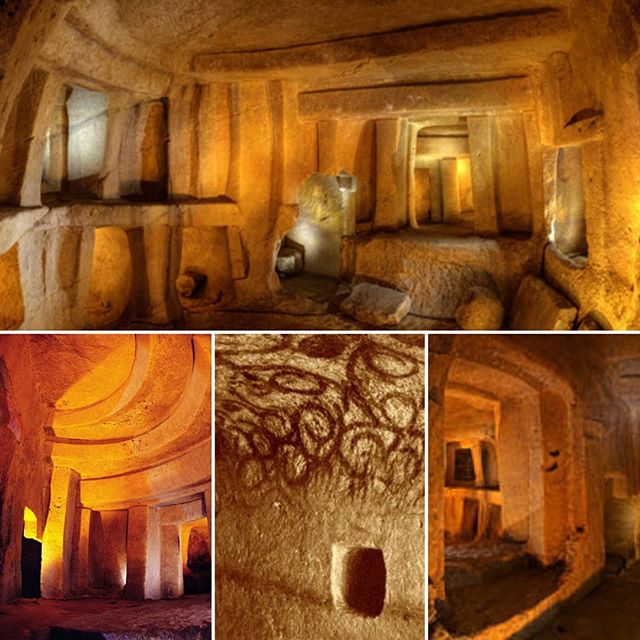
Visits are strictly limited to preserve this fragile site, making it a rare and unforgettable experience for anyone interested in prehistory, archaeology, and ancient cultures.
Pro tip: Book tickets in advance — access is restricted to only a few visitors per day. See website.
- Why visit: This underground burial site dates back to 4000 BCE and is one of the most important prehistoric monuments in the world.
- Important: Entry is limited to a small number of visitors per day. Book tickets weeks (or months) in advance.
- UNESCO Status: World Heritage Site
🧱 Fortifications of Valletta
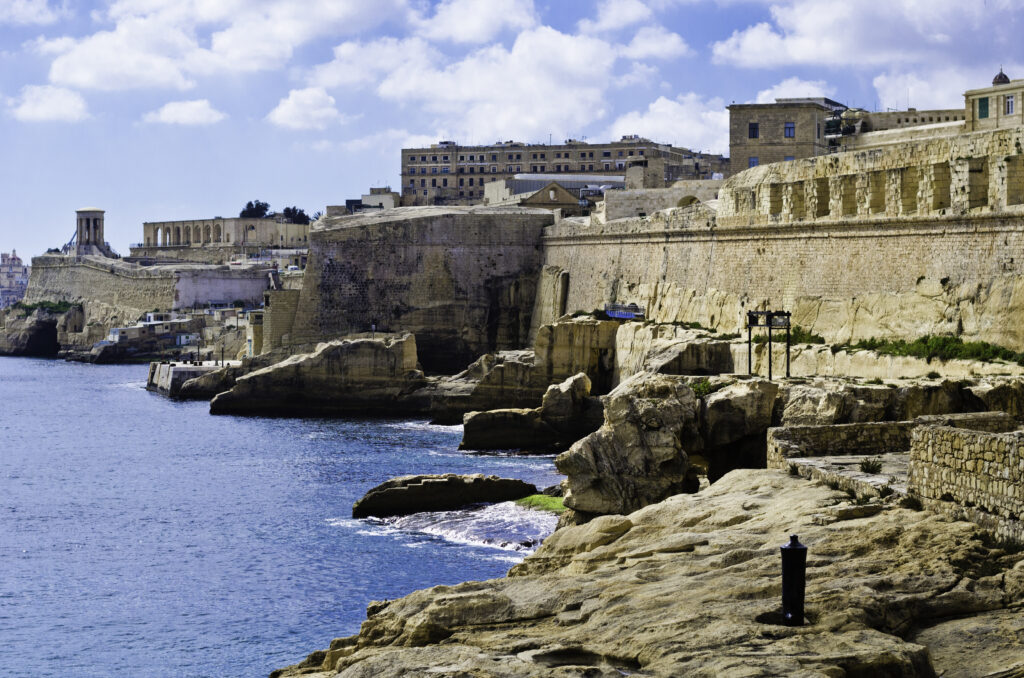
After the Great Siege of 1565, the Knights of St. John transformed the rocky peninsula of Valletta into one of the most fortified cities in the world. Designed by military engineers of the time, including Francesco Laparelli, these massive bastions, ramparts, forts, and curtain walls were built not only for defense but also as a bold statement of resilience and power.
Stretching along the Grand Harbour and Marsamxett Harbour, Valletta’s fortifications include impressive structures like Fort St. Elmo, St. John’s Bastion, and the Saluting Battery, which still fires daily as a tribute to Malta’s martial past. These walls have withstood centuries of conflict, from Ottoman sieges to WWII bombings, and remain among the best-preserved examples of early modern military architecture in Europe.
Walking along these walls offers panoramic views of the Mediterranean and a tangible sense of the city’s strategic importance through the ages. For history lovers, it’s a step back in time through the very stones that once defended an island at the crossroads of civilizations.
- Highlights:
- Upper Barrakka Gardens
- Lascaris War Rooms
- Fort St. Elmo and the National War Museum
📌 Extra Tips for Your Visit to Valletta
- 🏛️ Book a walking tour of Valletta: Dive into the capital’s Baroque beauty and fascinating history with a local expert. Click here to find tours.
- 🛏️ Want to stay in Valletta? Enjoy the charm of Malta’s capital right outside your door. Check the best hotel options here.
- 🗺️ Explore at your own pace? Use our custom map to discover Valletta’s top historical landmarks. See the map here.
🇲🇹 Malta in WWII – The Island That Refused to Surrender
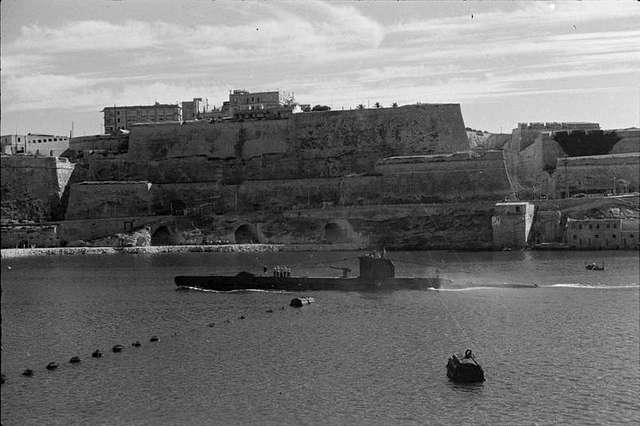
Though small in size, Malta played a colossal role in World War II, becoming one of the most heavily bombed places on Earth. Due to its strategic location between Europe and North Africa, the island served as a crucial base for the Allies to disrupt Axis supply lines across the Mediterranean.
Between 1940 and 1942, Malta endured over 3,000 air raids, particularly during the Siege of Malta, when Axis forces (Germany and Italy) tried to force the island into submission through relentless bombing and blockades. Despite extreme hardships, the resilience of the Maltese people and the bravery of Allied forces earned Malta the George Cross, awarded by King George VI in 1942, for “heroism and devotion” — a symbol now proudly displayed on the Maltese flag.
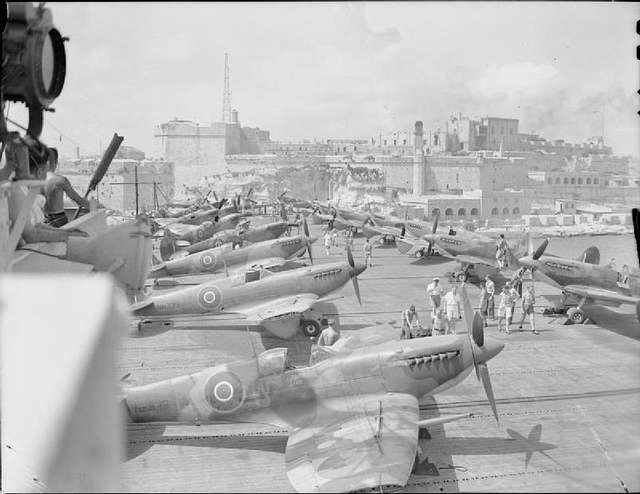
Places to visit:
- 🏛️ Lascaris War Rooms (Valletta): An underground command center from where the Allied invasion of Sicily was coordinated.
- 🕳️ Malta at War Museum (Birgu): Features authentic WWII shelters, uniforms, and personal stories of those who lived through the bombings.
- 🕍 The National War Museum at Fort St. Elmo (Valletta): Home to the original George Cross and extensive WWII exhibits.
- 🕳️ Underground Shelters in Mosta and Rabat: Explore the civilian experience during air raids.
🗣️ The Maltese Language – A Living Legacy of Malta’s History
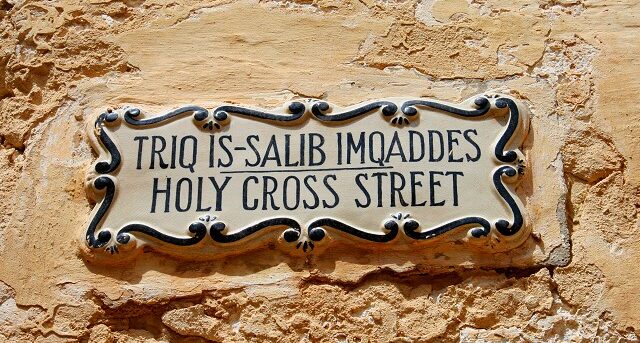
When exploring Malta history, we can’t ignore one of its most unique and enduring legacies: the Maltese language.
Maltese (Malti) is more than just a means of communication—it’s a living reflection of the island’s complex past. It’s the only Semitic language written in the Latin alphabet and the only one recognized as an official language of the European Union (See infomation here!). This linguistic blend mirrors the waves of civilizations that shaped Malta over thousands of years.
Where does it come from?
Maltese evolved from Siculo-Arabic, spoken in Sicily and Malta between the 9th and 12th centuries during Arab rule. But as new powers arrived—Normans, Italians, the Knights of St. John, the French, and the British—the language absorbed vocabulary and influences from Italian, Sicilian, French, and English. Today, you’ll hear this fascinating mix in everyday conversations on the island.
What makes it special for travelers?
Hearing locals switch between Maltese and English effortlessly is part of the cultural experience. Place names, old inscriptions, and even museum signs often include Maltese, adding another layer to your historical journey. Understanding its roots helps you appreciate Malta not just as a land of beautiful sites—but as a place where history lives in every spoken word.
👉 Whether you’re walking through the ancient streets of Mdina, reading plaques in Valletta, or hearing folk songs during a festa, You will realise the Maltese language connects it all.
🎯 Final Tips for Cultural Travelers
- Buy a Heritage Malta Pass for access to multiple sites.
- Consider a guided tour for deeper context.
- Wear comfortable shoes—many historical sites include stairs or uneven paths.
📌 Know more about Malta History
Want to explore Malta beyond the beaches? Don’t miss our full guide: How to Travel to Malta on a Budget: Essential Tips
Planning a trip to Malta but not sure where to start? Let us help with a custom itinerary! – Learn more!
✅ What You Need for a Smooth Trip to Malta: Essential Travel Checklist
Planning a trip to Malta? Here’s a practical checklist to ensure a stress-free experience from start to finish:
✈️ Travel Documents
- ✅ Passport – Must be valid for at least 6 months beyond your travel dates
- ✅ Visa – Not required for stays up to 90 days for many nationalities (check your visa status here)
- ✅ Proof of return or onward travel – Might be requested upon arrival
🛡️ Travel Essentials
- ✅ Get travel insurance – Covers medical issues, delays, lost luggage & more. Don’t travel without it!
- ✅ Book flights in advance – Best prices for early planners
- ✅ Reserve your airport transfer – Stress-free ride directly to your hotel
- ✅ Hotel bookings confirmed – Have digital or printed copies ready
💳 Money & Payments
- ✅ Credit/Debit card – Accepted almost everywhere
- ✅ Cash in euros (€) – Useful for small purchases, markets, buses
- ✅ Optional: Prepaid travel card – Great for budgeting and avoiding foreign transaction fees
📲 Connectivity & Apps
- ✅ Buy a local SIM card or eSIM – Stay connected affordably
- ✅ Google Maps + Google Translate – Essential for exploring & communicating
- ✅ Download Tallinja app – For real-time public transport info
🧳 What to Pack
- ✅ Reusable water bottle – Malta is sunny, stay hydrated
- ✅ Sunscreen & sunglasses – Even in winter, Malta gets a lot of sun
- ✅ Comfortable shoes – You’ll walk a lot, especially in historic areas
- ✅ Adapter plug – Malta uses Type G (UK-style, 3-pin plugs)
🚍 Local Transportation
- ✅ Tallinja Explore Card – Unlimited bus rides across Malta & Gozo
- ✅ Uber & Bolt apps – Cheaper and easier than taxis for families
- ✅ Optional: Rent a car – Especially handy for exploring Gozo
📌 Tip: Save or print this checklist so you won’t forget anything important!
🎁 Bonus: Want a ready-to-go plan? 👉 Download your FREE Malta Travel Guide here




Leave a Reply